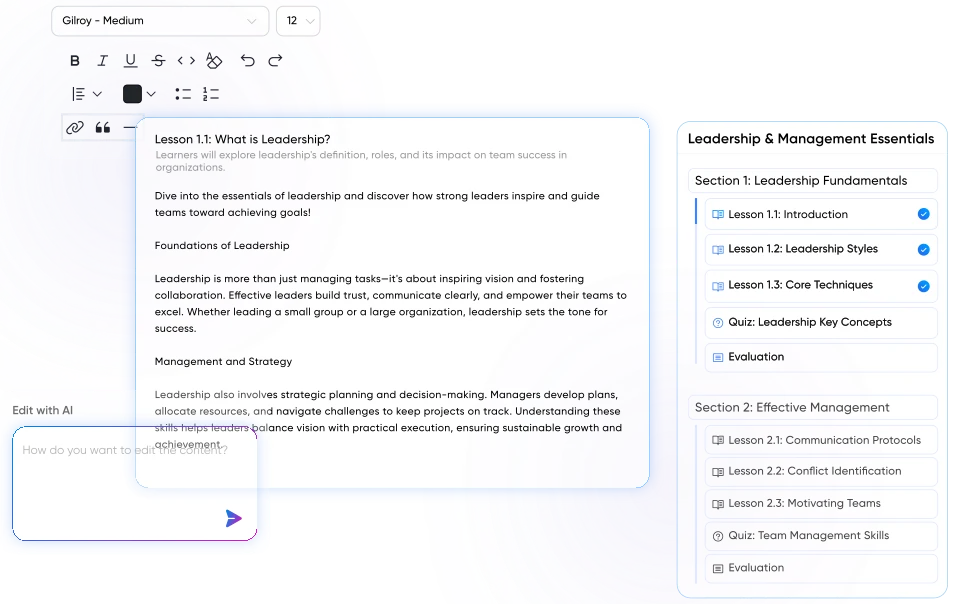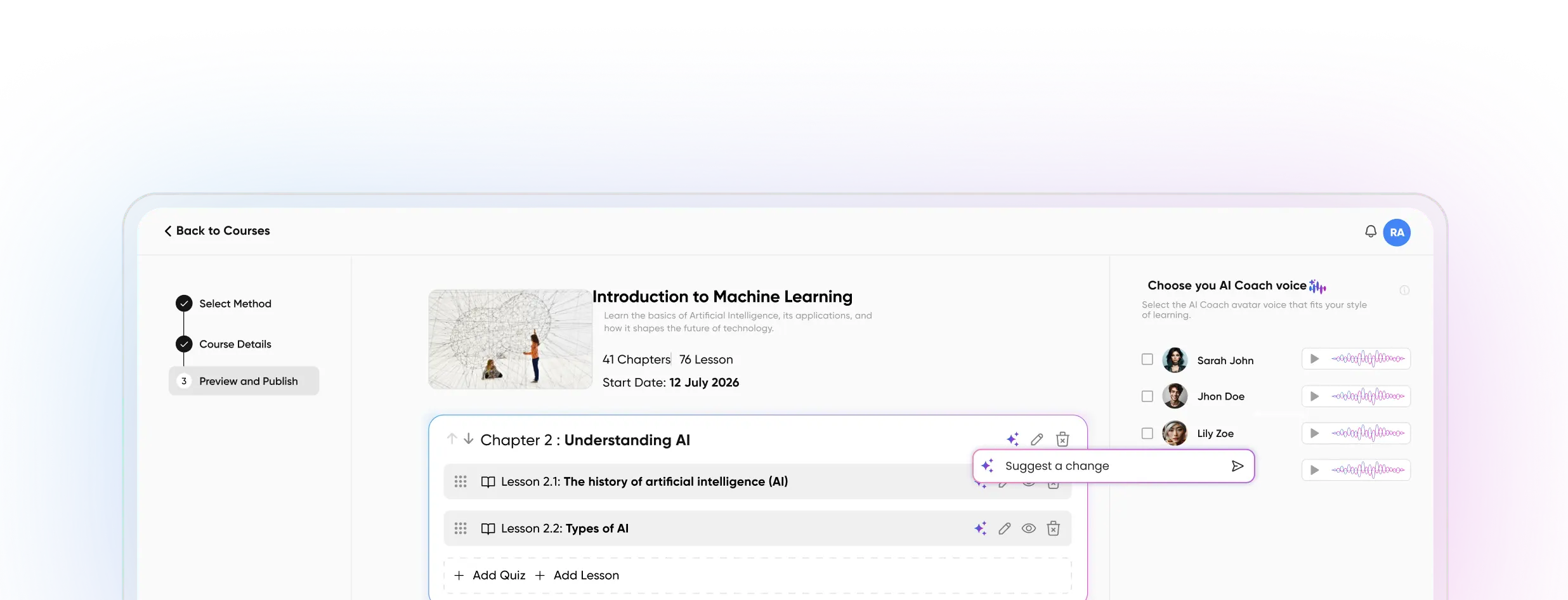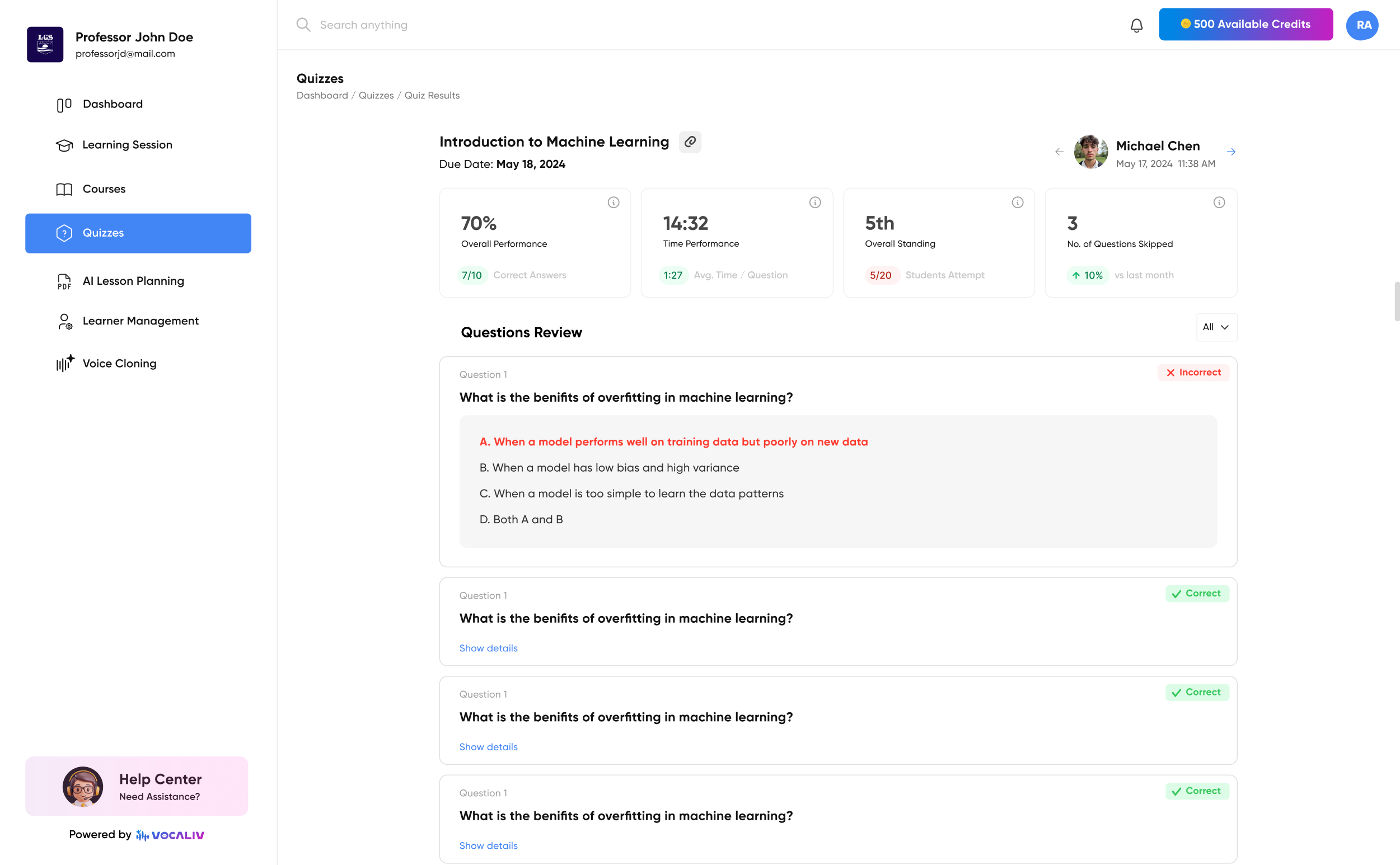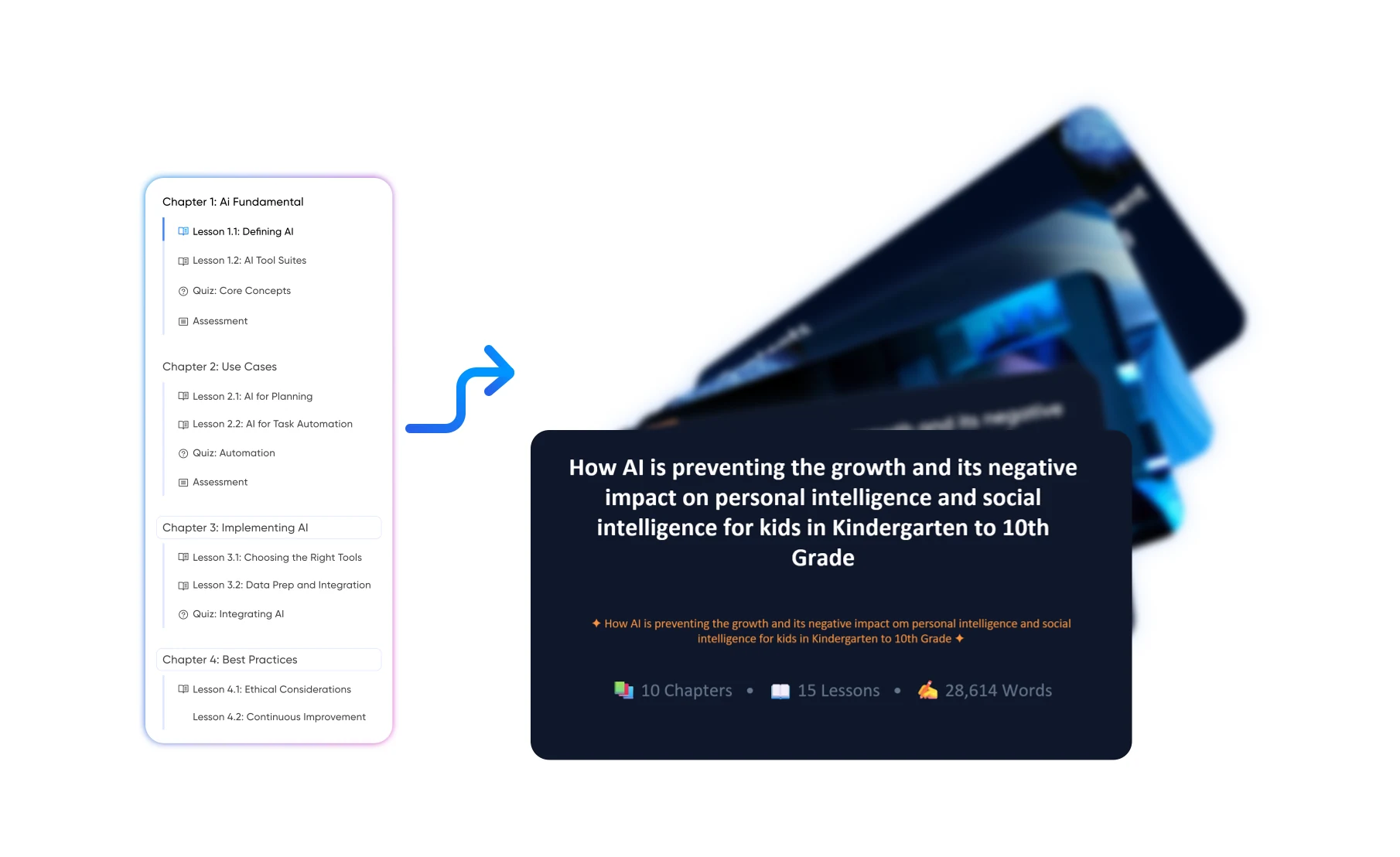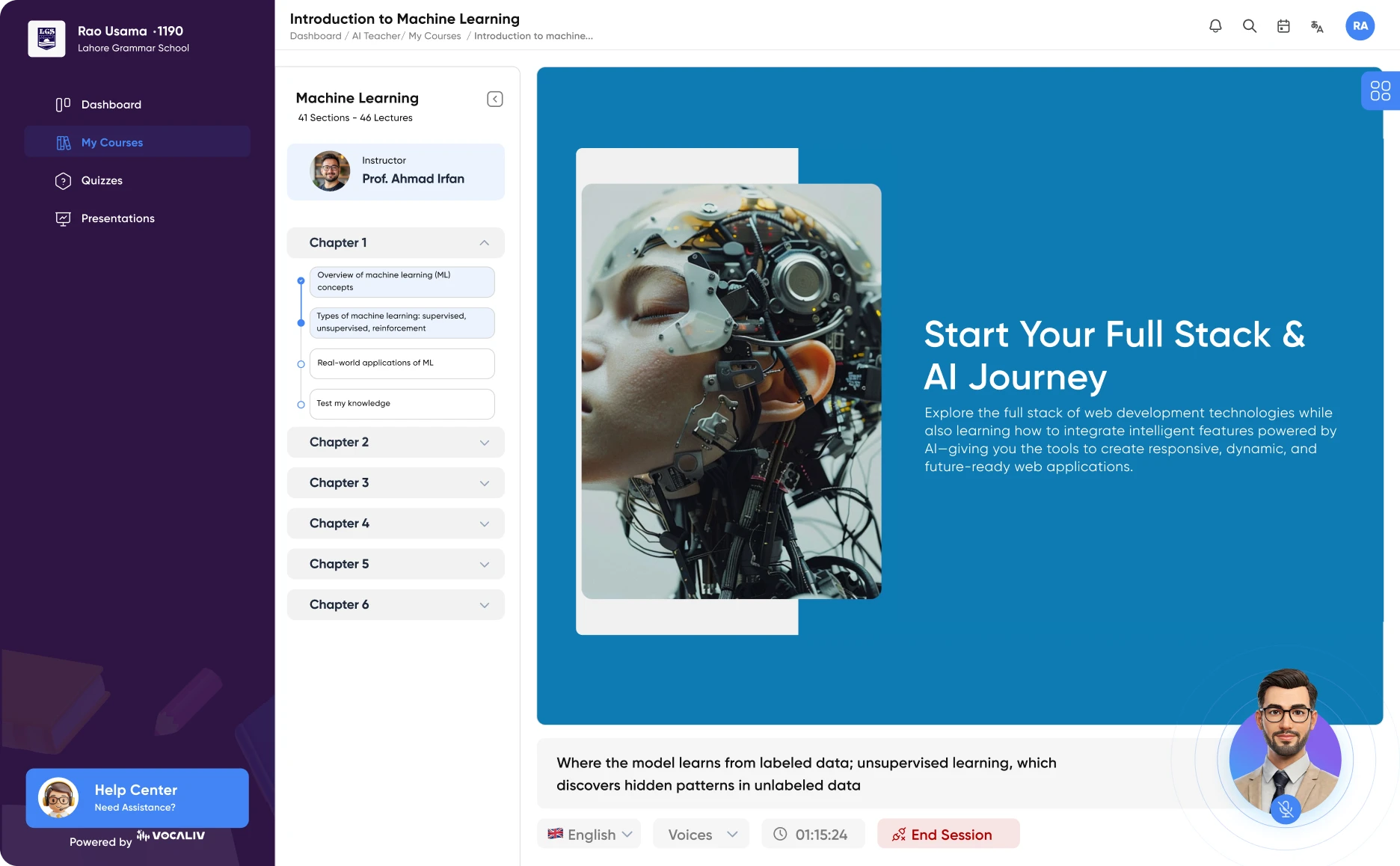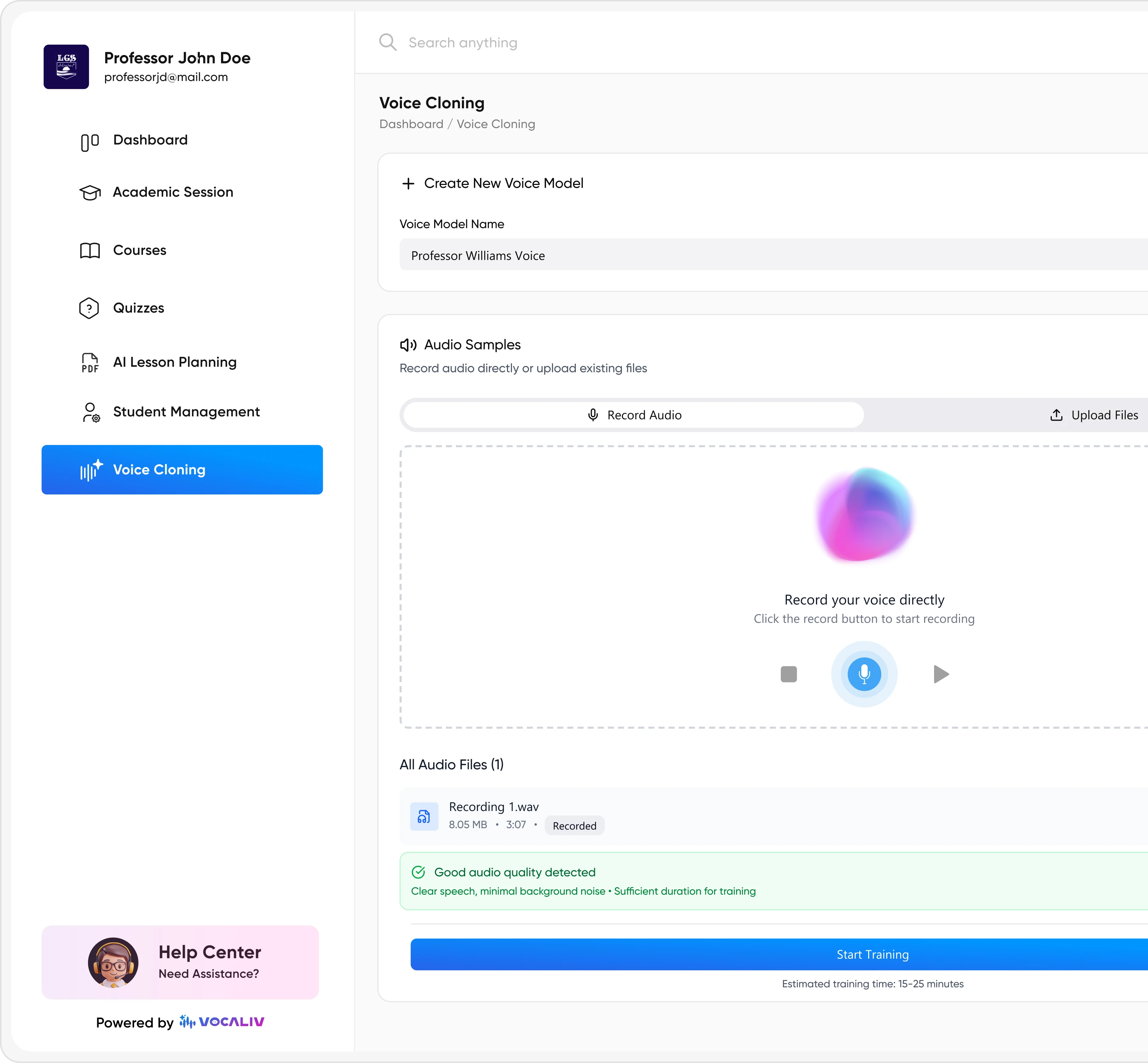
Help your teams plan, launch and manage AI chatbots that genuinely help customers and employees. Use this ready-to-customize training template to cover how business chatbots work, use-case selection, platform choices, conversation design, human handoff, accuracy and guardrails, data privacy, performance measurement and ongoing governance.
Many organizations are adding AI chatbots to websites, messaging apps and internal tools, but results vary widely. A poorly planned chatbot can frustrate customers, give incorrect answers, mishandle personal data or trap people in loops with no way to reach a person. Successful teams follow a clear approach: pick the right use cases, ground the chatbot in approved knowledge, design for handoff and keep measuring and improving.
This template provides a practical foundation for using AI chatbots in business. It covers how modern chatbots work, their strengths and limitations, identifying high-value use cases, choosing between platform options, conversation and tone design, human escalation, knowledge sources and guardrails, data privacy and compliance, testing and launch, performance metrics and the governance needed to keep a chatbot accurate and useful over time.
A suggested eight-module structure that can be adapted to your industry, customer channels, internal systems, approved platforms and AI governance policy.
Introduce the difference between rule-based chatbots and AI-powered conversational assistants, how large language models generate responses and why chatbots can sound confident while being wrong. Set realistic expectations by covering where chatbots perform well, such as answering common questions and guiding simple tasks, and where human judgement remains essential.
Help learners spot where a chatbot can genuinely add value, such as customer FAQs, order and booking queries, lead qualification, IT or HR helpdesk support and internal knowledge search. Cover how to prioritize use cases by volume, complexity and risk, and how to set clear goals before anything is built.
Give learners a practical overview of common options, from built-in chatbots in existing customer service tools to dedicated chatbot platforms and custom solutions. Cover evaluation criteria such as integration with current systems, language support, security, cost, scalability and vendor reliability, aligned to your procurement and IT approval process.
Teach the principles of designing helpful conversations: clear greetings, setting expectations that users are talking to an AI, guiding users to their goal, handling unclear requests and matching your brand voice. Emphasize designing an easy, visible route to a human agent and defining exactly when the chatbot should escalate.
Explain how chatbots should be grounded in approved, up-to-date content such as help articles, policies and product information. Cover how to limit the chatbot to topics it should handle, prevent it from inventing answers, handle sensitive or out-of-scope requests safely, and keep knowledge sources reviewed and current.
Help learners understand what data a chatbot collects, stores and shares, and how this must align with applicable privacy laws, consumer protection rules, industry regulations and internal security policies. Cover consent, transparency, data retention, access controls and avoiding the collection of unnecessary personal or sensitive information.
Show learners how to test a chatbot before launch using realistic questions, edge cases and difficult conversations, and how to roll it out in stages. Introduce key metrics such as resolution rate, handoff rate, customer satisfaction, response accuracy and common unanswered questions, and how to use them to guide improvements.
Bring the course together by defining who owns the chatbot, how conversations are reviewed, how content updates are approved and how issues or incidents are reported. Cover how to prepare frontline teams for working alongside a chatbot, communicate changes to customers and employees, and decide when a chatbot should be paused or retired.
Give teams a clear, practical framework for planning and managing AI chatbots, so automation improves service and efficiency instead of creating new risks.
Help teams focus on use cases with real volume and value rather than launching a chatbot simply because the technology is available.
Design chatbots that answer questions quickly, speak in your brand voice and hand over smoothly to a person when the situation calls for it.
Teach teams to ground chatbots in approved content, set clear guardrails and catch errors before they reach customers or employees.
Make sure everyone involved understands privacy, consent and security requirements, so chatbot projects meet legal and policy obligations from day one.
Connect chatbot performance to clear metrics, regular conversation reviews and defined ownership, so the chatbot keeps getting better after launch.

By the end of the training, learners should be able to:
Use one core chatbot template, then emphasize the decisions, risks, tools and level of responsibility each audience is likely to encounter.
| Audience | What to emphasize |
|---|---|
| Business leaders / executives | Strategic use cases, business case and ROI, risk and reputation, customer trust, investment decisions, governance ownership and how chatbots fit wider digital strategy. |
| Customer service / support teams | Common customer queries, handoff rules, reviewing chatbot conversations, handling escalated customers, updating FAQs, tone consistency and service-quality metrics. |
| Sales & marketing teams | Lead capture and qualification, product and pricing accuracy, brand voice, campaign-linked chat journeys, consent for marketing data and conversion tracking. |
| IT / digital & product teams | Platform evaluation, system integration, knowledge-source management, security controls, testing, monitoring, access management and incident response. |
| HR / operations (internal chatbots) | Employee helpdesk use cases, policy and procedure accuracy, confidentiality of employee data, escalation to HR or IT staff and keeping internal content current. |
Start with the core chatbot structure, then replace generic guidance with your platforms, customer channels, policies, governance roles and real business use cases.

Add your approved chatbot platforms, AI governance policy, data protection rules, brand voice guidelines, escalation procedures and the owners responsible for chatbot content and performance.
Use approved examples based on real customer and employee questions - for example order tracking, bookings, returns, product queries, account support, IT requests or HR policy questions.
Create short assessments around use-case selection, conversation design, handoff decisions, accuracy and guardrails, data privacy scenarios and interpreting performance metrics.
Prepare an instructor-led version for leadership briefings, project kick-offs, customer service team training or digital transformation workshops.
Let learners ask questions based on the approved training content, chatbot guidelines and policies you provide. The AI Coach can support learning and reinforcement, but it should not replace your organization's AI governance decisions, legal or compliance advice, or vendor-specific technical guidance.
Where appropriate, voice cloning can help deliver AI-assisted course content in a familiar digital transformation, customer experience or training facilitator voice.
Start with a structured AI chatbots for business template, add your own platforms, policies and real customer conversations, and give teams a practical framework for choosing the right use cases, designing helpful conversations and managing chatbots responsibly.