IT / Technology Operations Course Template

ITIL Fundamentals Training Template for IT Service Management

Give IT teams a shared language and practical framework for delivering reliable, value-focused IT services. Use this ready-to-customize training template to cover core ITSM concepts, the service value system, guiding principles, service desk and incident management, problem and change management, service levels, knowledge and configuration management, and continual improvement.

Skills / Topics
  • ITSM concepts
  • Service value system
  • Value chain
  • Four dimensions
  • Guiding principles
  • Service desk
  • Incident management
  • Service requests
  • Problem management
  • Change enablement
  • Service level management
  • Continual improvement
Template Overview

Help IT teams move from reactive firefighting to consistent, well-managed services that support business goals and user needs.

Many IT teams work hard but struggle with the same recurring issues: tickets handled differently by each person, the same incidents returning again and again, changes that cause unexpected outages and unclear expectations between IT and the business. A shared service management framework gives everyone common terminology, clear processes and a focus on delivering value rather than simply closing tickets.

This template provides a practical foundation in ITIL concepts and IT service management. It covers key ITSM terminology, the service value system and value chain, the four dimensions of service management, the guiding principles, service desk, incident and service request management, problem management and change enablement, service level management and metrics, knowledge, configuration and asset management, and continual improvement, all adaptable to your own tools and processes.

Structure
8 modules
Audiences
5 workplace tracks
Scope
Incidents, change & service levels
Delivery
Fully customizable in Vocaliv
What's Included

What's Included in This Training Template

A suggested eight-module structure that can be adapted to your IT operating model, service management tools, team structure, service catalogue and internal processes.

  1. Module 1

    ITSM Foundations: Key Concepts & Terminology

    Introduce what IT service management is and why it matters, along with core concepts such as services, products, value, outcomes, costs and risks, service providers and consumers. Explain how ITIL provides a widely used framework of best practice and how organizations adapt it rather than following it rigidly.

  2. Module 2

    Service Value System, Value Chain & Four Dimensions

    Help learners understand how the different parts of an organization work together to create value through services. Cover the service value system and value chain activities at a practical level, and the four dimensions of service management: organizations and people, information and technology, partners and suppliers, and value streams and processes.

  3. Module 3

    Guiding Principles in Practice

    Teach the ITIL guiding principles, such as focusing on value, starting where you are, progressing iteratively with feedback and keeping things simple and practical, using everyday IT examples. Show how these principles help teams make better decisions in situations that processes alone cannot fully cover.

  4. Module 4

    Service Desk, Incident Management & Service Requests

    Build practical understanding of how the service desk acts as the single point of contact for users, and the difference between incidents and service requests. Cover logging, categorizing, prioritizing by impact and urgency, escalation, communication with users, major incident handling and restoring service as quickly as possible.

  5. Module 5

    Problem Management & Change Enablement

    Help learners understand how problem management identifies and addresses the underlying causes of recurring incidents, including known errors and workarounds. Introduce change enablement, including standard, normal and emergency changes, risk assessment, approvals and how to balance speed of delivery with stability.

  6. Module 6

    Service Level Management, Metrics & Reporting

    Explain how service levels are agreed with the business and measured in practice, including service level agreements, targets, monitoring and reporting. Cover meaningful metrics such as response and resolution times, user satisfaction and service availability, and the risk of focusing on metrics that do not reflect real user experience.

  7. Module 7

    Knowledge, Configuration & Asset Management

    Show learners how well-maintained knowledge articles, configuration information and IT asset records support faster resolution, better changes and more informed decisions. Cover practical habits for documenting fixes, keeping records accurate and using knowledge to enable user self-service.

  8. Module 8

    Continual Improvement & Applying ITSM in Your Organization

    Bring the course together by showing how teams identify improvement opportunities, use feedback and data, and make changes in small, measurable steps. Connect the framework to your own service management tool, workflows, roles and service catalogue so learners can apply what they have learned straight away.

Why Your Team Needs ITIL & IT Service Management Fundamentals Training

Give IT teams a common framework and shared language so services become more consistent, reliable and aligned to what the business actually needs.

Create consistency across IT teams

Replace individual working styles with shared terminology, clear processes and agreed ways of logging, prioritizing and resolving work.

Restore services faster and reduce repeat incidents

Help teams handle incidents in a structured way and use problem management to address root causes instead of fixing the same issue repeatedly.

Reduce disruption from changes

Introduce change enablement practices that assess risk and coordinate changes, reducing avoidable outages without slowing delivery unnecessarily.

Strengthen the relationship between IT and the business

Use service levels, clear communication and a focus on value to set realistic expectations and build trust with users and stakeholders.

Build a culture of continual improvement

Encourage teams to use data, feedback and small iterative changes to keep improving services, tools and ways of working over time.

An IT team member wearing headphones, working across several monitors at a service desk
Learning Outcomes

What learners will be able to do

By the end of the training, learners should be able to:

  • Explain key IT service management concepts, including services, value, outcomes, costs and risks, and describe the role of ITIL as a best-practice framework.
  • Describe the service value system, value chain and four dimensions of service management and how they support value creation.
  • Apply the ITIL guiding principles to practical IT decisions and everyday service management situations.
  • Distinguish between incidents, service requests and problems, and prioritize work using impact and urgency.
  • Describe the purpose of problem management and change enablement and follow the organization's processes for each.
  • Explain how service levels, metrics and reporting are used to measure service performance and user experience.
  • Use knowledge, configuration and continual improvement practices within the organization's service management tool and workflows.
Customize by Role

Customize the Training by Workplace Role

Use one core ITSM template, then emphasize the practices, tools, decisions and level of responsibility each audience is likely to encounter.

AudienceWhat to emphasize
Service desk / IT support agentsIncident and service request handling, logging and categorization, impact and urgency, escalation paths, user communication, knowledge articles and service level targets.
Technical teams (infrastructure, applications, DevOps)Incident resolution, problem management and root cause analysis, change enablement, configuration records, collaboration with the service desk and continual improvement.
IT managers / service ownersService value, service level agreements, metrics and reporting, major incident oversight, change approval, supplier management, team performance and improvement planning.
Business stakeholders / non-IT staffWhat IT services are, how to request support, service levels and priorities, how changes are managed, how to give feedback and the shared responsibility for good service.
New IT hires / graduatesCore ITSM terminology, the guiding principles, how work flows through the service desk, the organization's tools and processes, and how their role contributes to service value.
Customize With Vocaliv

Customize This ITIL & IT Service Management Template With Vocaliv

Start with the core ITSM structure, then replace generic guidance with your service catalogue, tools, workflows, priority definitions, service levels and real IT scenarios.

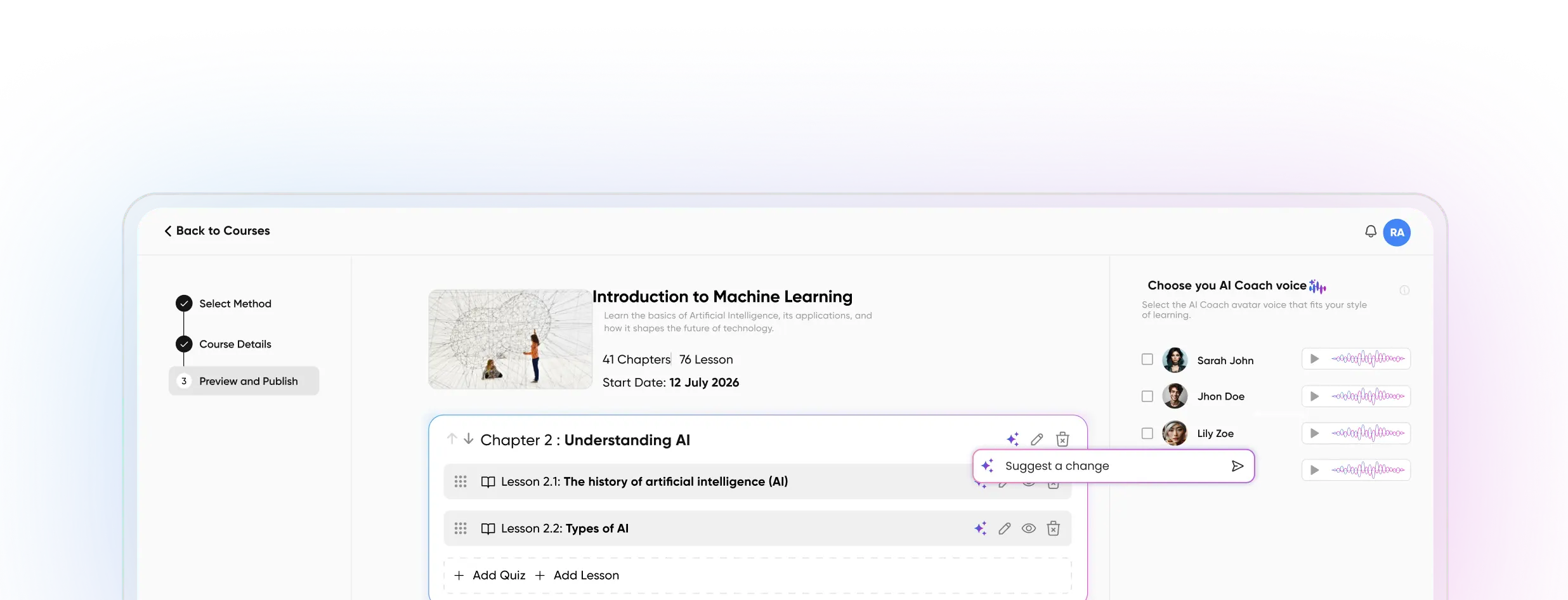
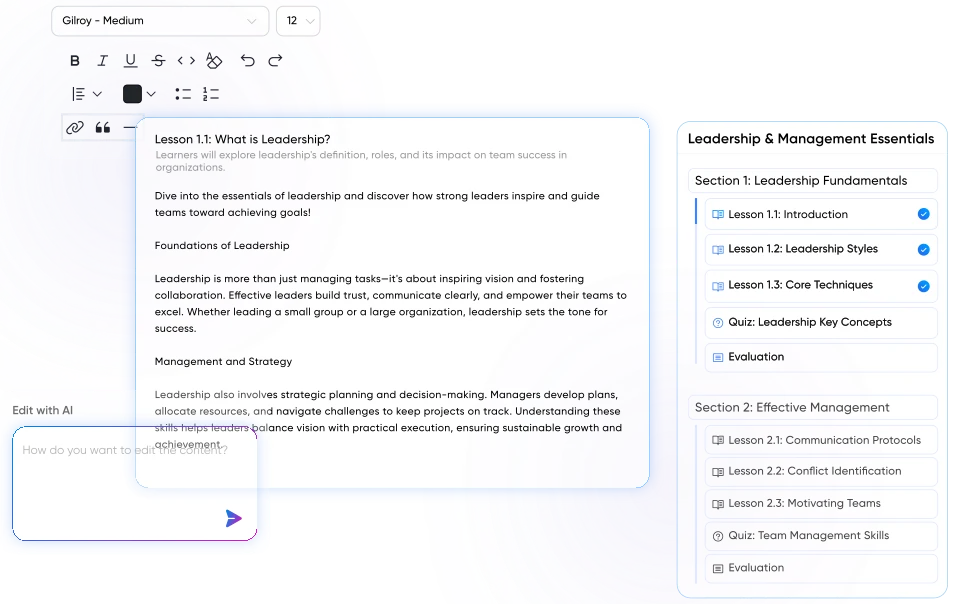
The Vocaliv course editor with the template's modules being rewritten around the organization's service catalogue, priority matrix and change approval process
1

Align the course to your service management processes

Add your service catalogue, priority matrix, escalation paths, change approval process, service level targets, ITSM tool screenshots and the owners responsible for each practice.

2

Add realistic scenarios from your IT environment

Use approved examples based on what your teams actually handle - for example password resets, network outages, software requests, failed deployments, recurring application errors or supplier issues.

3

Generate knowledge checks and prioritization exercises

Create short assessments around ITSM terminology, guiding principles, incident versus request versus problem, impact and urgency, change types and service level decisions.

4

Turn the course into presentation-ready slides

Prepare an instructor-led version for IT onboarding, service desk training, ITSM tool rollouts or process improvement workshops.

5

Use Vocaliv AI Coach where appropriate

Let learners ask questions based on the approved training content and service management processes you provide. The AI Coach can support learning and reinforcement, but it should not replace your organization's process owners, change approval decisions or official certification training.

6

Use your trainer's voice

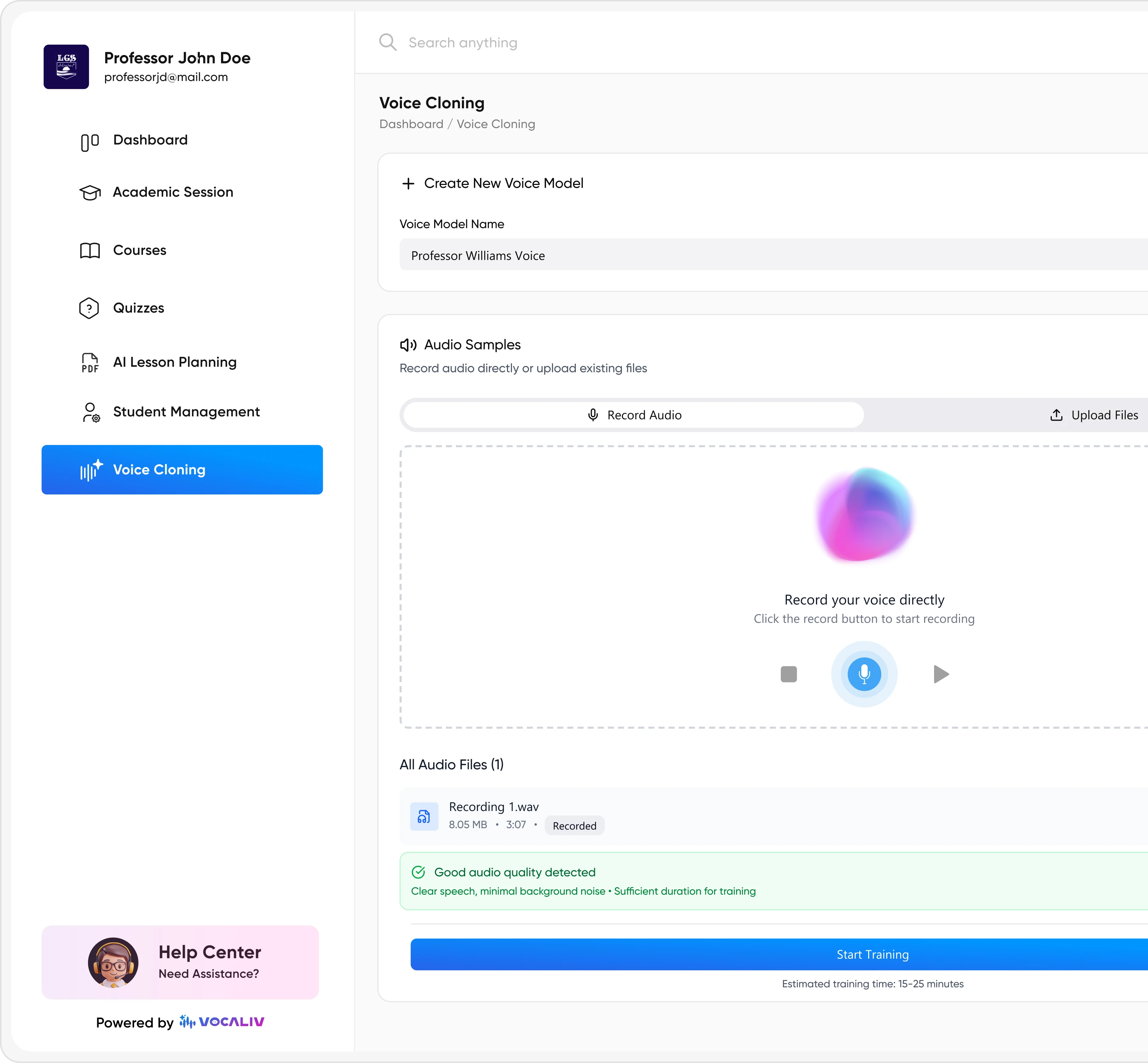
Where appropriate, voice cloning can help deliver AI-assisted course content in a familiar IT service management, service desk or training facilitator voice.

FAQ

Frequently Asked Questions

Give Your IT Team a Shared Framework for Better Service

Start with a structured ITIL fundamentals training template, add your own service catalogue, tools, processes and real IT scenarios, and give teams a practical framework for resolving issues faster, managing change safely and continually improving services.

Chat with us 👋