Help employees write and speak English accurately, clearly and professionally in everyday work situations. Use this ready-to-customize training template to cover sentence structure, verb tenses, subject-verb agreement, articles, prepositions, modal verbs for polite requests, active and passive voice, punctuation, common errors and proofreading.
Small grammar mistakes can have a big impact at work. An incorrect tense can confuse a deadline, a missing article can make a sentence sound unnatural, and a punctuation error can change the meaning of an instruction. Many employees, especially those using English as a second or additional language, understand English well but lack confidence in the grammar that makes their writing and speaking accurate and professional.
This template provides a practical foundation in English grammar for workplace communication. Rather than abstract rules, it focuses on the grammar employees use every day: building clear sentences, choosing the right tense, subject-verb agreement, articles and nouns, prepositions and linking words, modal verbs for polite and diplomatic language, active and passive voice, questions and reported speech, punctuation, the most common workplace errors and simple proofreading habits.
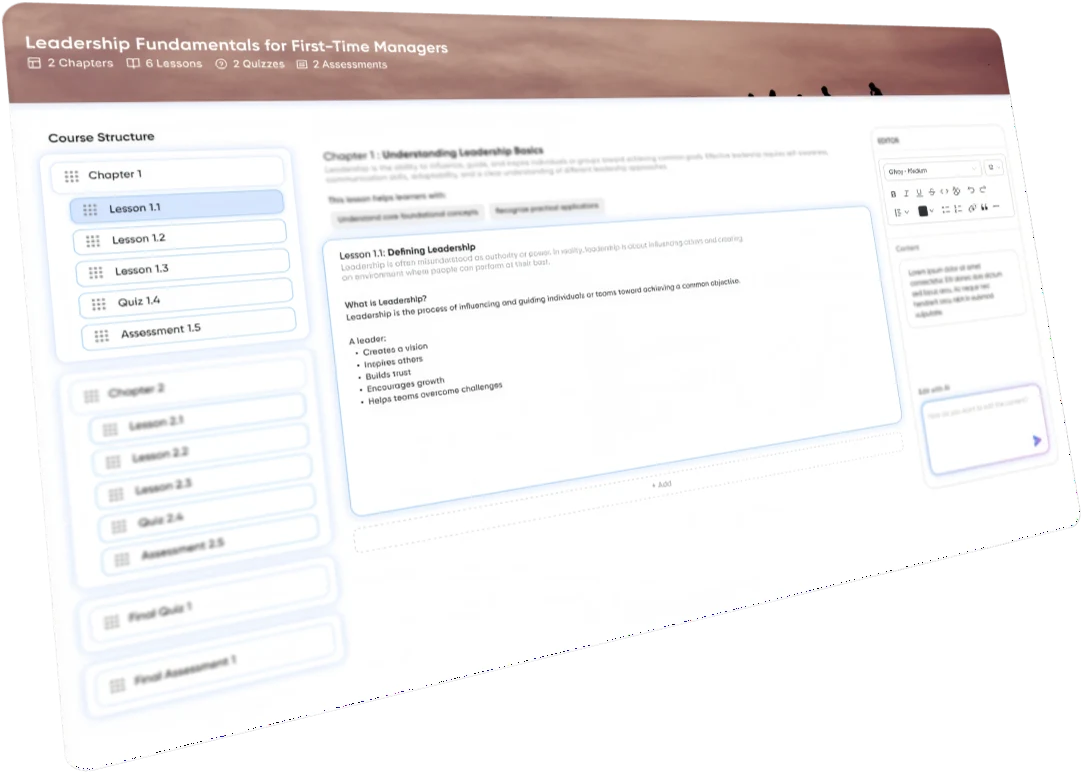
A suggested eight-module structure that can be adapted to your learners' English level, job roles, industry vocabulary and the types of writing and speaking they do most often.
Introduce the building blocks of clear English: nouns, verbs, adjectives, adverbs and other parts of speech, and how they combine into complete sentences. Cover subject-verb-object word order, simple, compound and complex sentences, and how to avoid sentence fragments and long, run-on sentences in workplace writing.
Help learners choose the right tense for common work situations: present simple for routines and facts, present continuous for current projects, past simple for completed actions, present perfect for recent updates and results, and future forms for plans, schedules and commitments. Use realistic examples from emails, reports and meetings.
Build accuracy in areas that often cause mistakes: matching verbs to singular and plural subjects, countable and uncountable nouns such as information, feedback and equipment, and using a, an, the or no article correctly. Include common workplace phrases where these errors frequently appear.
Teach the prepositions most often used at work, including those for time, place and common fixed expressions such as responsible for, interested in and attached to. Cover conjunctions and linking words that connect ideas clearly, such as however, therefore, as a result and in addition, so writing flows logically.
Show learners how modal verbs such as could, would, should, may and might shape tone and politeness. Cover making requests, offering help, giving suggestions, expressing obligation and softening disagreement or bad news, so messages sound professional rather than too direct or unclear.
Help learners understand when to use active voice for clarity and accountability and when passive voice is appropriate, such as in formal reports or when the action matters more than who did it. Cover forming clear questions, indirect questions for politeness and reporting what others said in meetings and summaries.
Build confidence with commas, full stops, apostrophes, colons, semicolons and capital letters in professional writing. Address the most common errors at work, such as its and it's, your and you're, incorrect plurals, confusing word pairs, double negatives and literal translations from other languages.
Bring the course together with a simple proofreading routine learners can apply to every email, report or message. Cover reading aloud, checking one error type at a time, using grammar and spell-check tools wisely while verifying their suggestions, and applying new grammar skills to real documents from their own role.
Give employees practical grammar skills grounded in real workplace writing, so their messages are accurate, clear and professional every time.
Help employees use the right tense, structure and punctuation so instructions, deadlines and updates are understood exactly as intended.
Raise the accuracy and professionalism of emails, reports, proposals and customer messages across your organization.
Give employees a clear understanding of the grammar they use most, reducing hesitation and the time spent rewriting messages.
Ensure customer-facing communication reflects well on your brand, with fewer errors that could reduce trust or credibility.
Support wider business English, writing and presentation training by strengthening the core grammar that all communication depends on.

By the end of the training, learners should be able to:
Use one core English grammar template, then emphasize the writing tasks, vocabulary and communication situations each audience is likely to encounter.
| Audience | What to emphasize |
|---|---|
| Customer-facing / service staff | Polite requests and apologies with modal verbs, question forms, common email and chat errors, articles and prepositions, and proofreading customer messages before sending. |
| Administrative & support staff | Email accuracy, punctuation and capitalization, meeting minutes and reported speech, tenses for scheduling and updates, and formal letter conventions. |
| Managers / team leads | Clear instructions and expectations, diplomatic language for feedback, tenses for progress updates, reports and summaries, and reviewing team members' writing. |
| Technical & specialist professionals | Passive voice in reports and documentation, precise sentence structure, linking words for explanations, consistency in terminology and avoiding ambiguous phrasing. |
| New hires / graduates | Core sentence structure, the most common workplace errors, professional versus informal grammar, email basics and building a personal proofreading routine. |
Start with the core grammar structure, then replace generic examples with your industry vocabulary, communication standards and real workplace writing samples.

Add your organization's style guide, preferred spelling conventions such as British or American English, email templates, industry terminology and target proficiency levels for each learner group.
Use approved, anonymized examples based on writing employees actually produce - for example customer emails, internal updates, incident reports, proposals, meeting minutes or chat messages.
Create short assessments and practice tasks around tenses, articles, prepositions, subject-verb agreement, modal verbs, punctuation and spotting and correcting common errors.
Prepare an instructor-led version for language workshops, onboarding programmes, customer service training or short grammar refresher sessions.
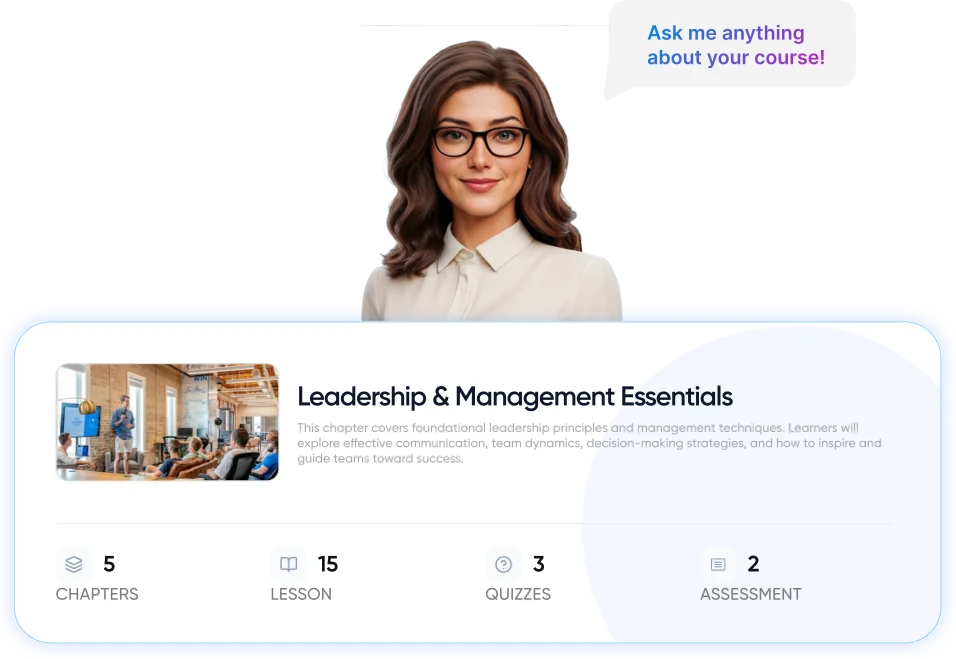
Let learners practise and ask grammar questions based on the approved training content and style guide you provide. The AI Coach can support practice and reinforcement, but it should not replace feedback from a qualified language trainer or formal assessment where proficiency needs to be certified.
Where appropriate, voice cloning can help deliver AI-assisted course content in a familiar language trainer, communication coach or training facilitator voice.
Start with a structured English grammar course template, add your own style guide, industry vocabulary and real workplace examples, and give employees a practical framework for writing clearly, avoiding common errors and communicating with confidence.