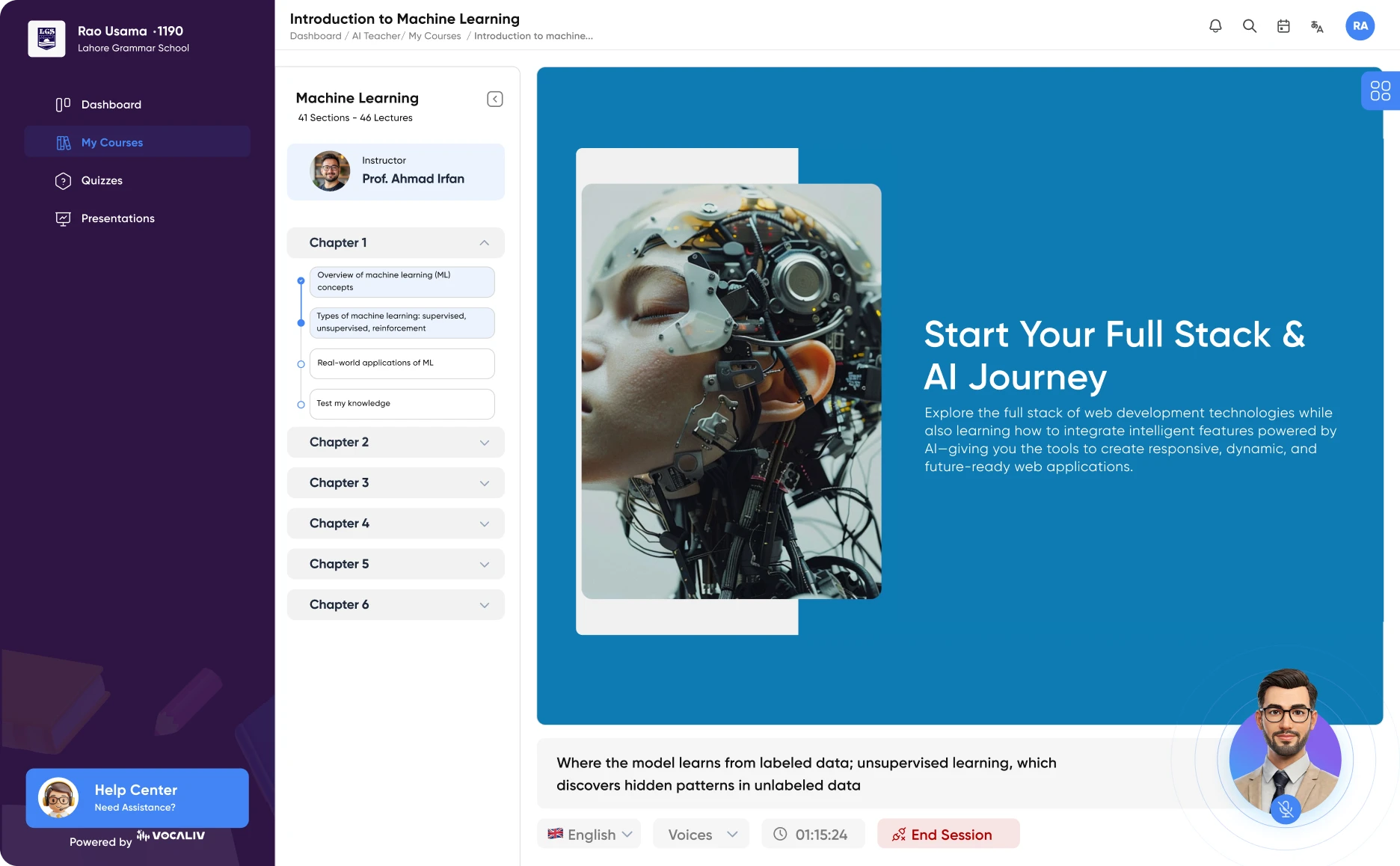
Give employees and managers a practical foundation for supporting mental well-being at work without turning colleagues into counsellors. Use this ready-to-customize course template to cover psychosocial risks, stress and recovery, supportive conversations, boundaries, help-seeking, manager responsibilities, crisis escalation and return-to-work support.
Work can support mental well-being through purpose, structure, social connection and fair working conditions, but poorly managed psychosocial risks can also contribute to stress and harm. Employees benefit from knowing what healthy support looks like, where their responsibilities begin and end, and how to access help without stigma or unnecessary disclosure.
This template provides a practical foundation for employee well-being and workplace mental health. It covers mental health awareness, psychosocial risks and work design, signs of strain, recovery and healthy work habits, supportive conversations, manager responsibilities, psychological safety, crisis escalation, workplace support and return-to-work.
A suggested eight-module structure that can be adapted to your workforce, operating environment, people policies, support resources and local legal requirements.
Introduce mental health and well-being in practical, non-stigmatizing terms. Explain that mental health exists on a continuum and can change over time. Explore how work can support well-being while also acknowledging that mental health conditions have many causes and should not be reduced to workplace factors alone.
Help learners recognize workplace conditions that can affect mental health, such as excessive workload, low role clarity, lack of control, poor communication, bullying or harassment, job insecurity, unsafe environments, discrimination, conflict or poorly managed change. Emphasize organizational prevention and early problem-solving rather than expecting individuals to simply become more resilient.
Build awareness of observable changes that may signal someone is struggling - for example withdrawal, reduced concentration, irritability, repeated absence or changes in performance - while reinforcing that these signs are not proof of a mental health condition. Teach employees and managers to focus on impact, support and appropriate referral rather than labels.
Explore practical well-being habits such as breaks, realistic prioritization, switching off from work, sleep-supportive routines, movement, social connection and asking for help early. Reinforce that individual habits matter, but they should complement - not replace - action on excessive workload, unsafe conditions or other organizational risks.
Teach a simple approach for checking in: choose an appropriate setting, describe what has been noticed, ask open questions, listen without trying to diagnose or fix, respect privacy and point the person toward relevant support. Clarify the limits of confidentiality when there is an immediate safety concern or a legal or organizational duty to escalate.
Help managers create conditions where people can raise concerns, ask for clarification, admit mistakes and request support without unnecessary fear. Cover role clarity, fair workload discussions, regular check-ins, respectful performance conversations, reasonable workplace adjustments where applicable and the importance of involving HR, occupational health or other specialists when the issue exceeds the manager role.
Prepare learners to respond when someone appears to be in immediate danger or expresses concern about self-harm or serious harm. Focus on taking the concern seriously, following the organization's crisis or emergency procedure, contacting local emergency or crisis services or qualified professionals when required, and avoiding attempts to assess or manage a crisis alone.
Bring the training together by showing how organizations can support people through periods of ill health and return to work: clear communication, privacy, agreed adjustments, phased responsibilities where appropriate, regular review and coordination with the employee, HR, occupational health or other relevant professionals. Reinforce that sustained well-being also depends on leadership, work design and culture.
Build a shared language for well-being, healthier work and appropriate support - without turning managers or colleagues into clinicians.
Give employees a clearer, more respectful way to talk about mental well-being and encourage earlier help-seeking without assumptions or labels.
Help teams identify workload, role clarity, conflict, change, bullying, low control and other work factors that may need organizational action.
Give managers and colleagues a simple framework for checking in, listening, maintaining boundaries and signposting to the right resources.
Reinforce respectful leadership behaviors that make it easier for employees to raise concerns, ask questions, discuss workload and seek support.
Help employees know what to do when a concern is urgent, who should be contacted and why serious situations should not be managed informally or alone.
Help managers understand the value of structured communication, agreed support and appropriate specialist involvement when an employee returns after mental-health-related absence.

By the end of the training, learners should be able to:
Use one core well-being and mental-health template, then emphasize the risks, conversations, responsibilities and support pathways each audience is most likely to encounter.
| Audience | What to emphasize |
|---|---|
| All employees | Mental health awareness, stigma, psychosocial risks, sustainable work habits, peer support boundaries, help-seeking, support resources and urgent escalation. |
| People managers / supervisors | Workload and role clarity, check-ins, psychological safety, supportive conversations, privacy, reasonable workplace support, performance boundaries, crisis escalation and return-to-work coordination. |
| HR / People / L&D teams | Policy alignment, manager support, accommodations or adjustments, leave and return-to-work processes, support-resource communications, training governance and referral routes. |
| Remote / hybrid teams | Isolation, digital overload, communication norms, availability boundaries, workload visibility, connection and choosing appropriate channels for sensitive conversations. |
| Higher-pressure / frontline teams | Fatigue, exposure to distressing events, workload, peer support, decompression, access to specialist resources, supervisor check-ins and urgent escalation. |
Start with the core workplace mental-health structure, then replace generic guidance with your support resources, people policies, manager expectations and real workplace scenarios.

Add your mental-health and well-being policy, psychosocial-risk approach, employee assistance programme, occupational-health contacts, leave and accommodation processes, anti-bullying and harassment routes, crisis contacts and manager responsibilities.
Use approved anonymized examples based on workload pressure, organizational change, remote work, difficult conversations, return-to-work situations and common manager questions so learners can practice appropriate responses.
Create short assessments around psychosocial risk, supportive conversations, privacy, boundaries, help-seeking, manager responsibilities and escalation - plus reflection prompts for personal and team well-being habits.
Prepare an instructor-led version for employee awareness sessions, manager training, onboarding, well-being campaigns or leadership development programmes.
Let learners ask questions based on the approved workplace guidance, policies and resources you provide. The AI Coach can support learning and reinforcement, but it should not diagnose mental health conditions, provide therapy, assess crisis risk or replace qualified mental-health, occupational-health or emergency professionals.
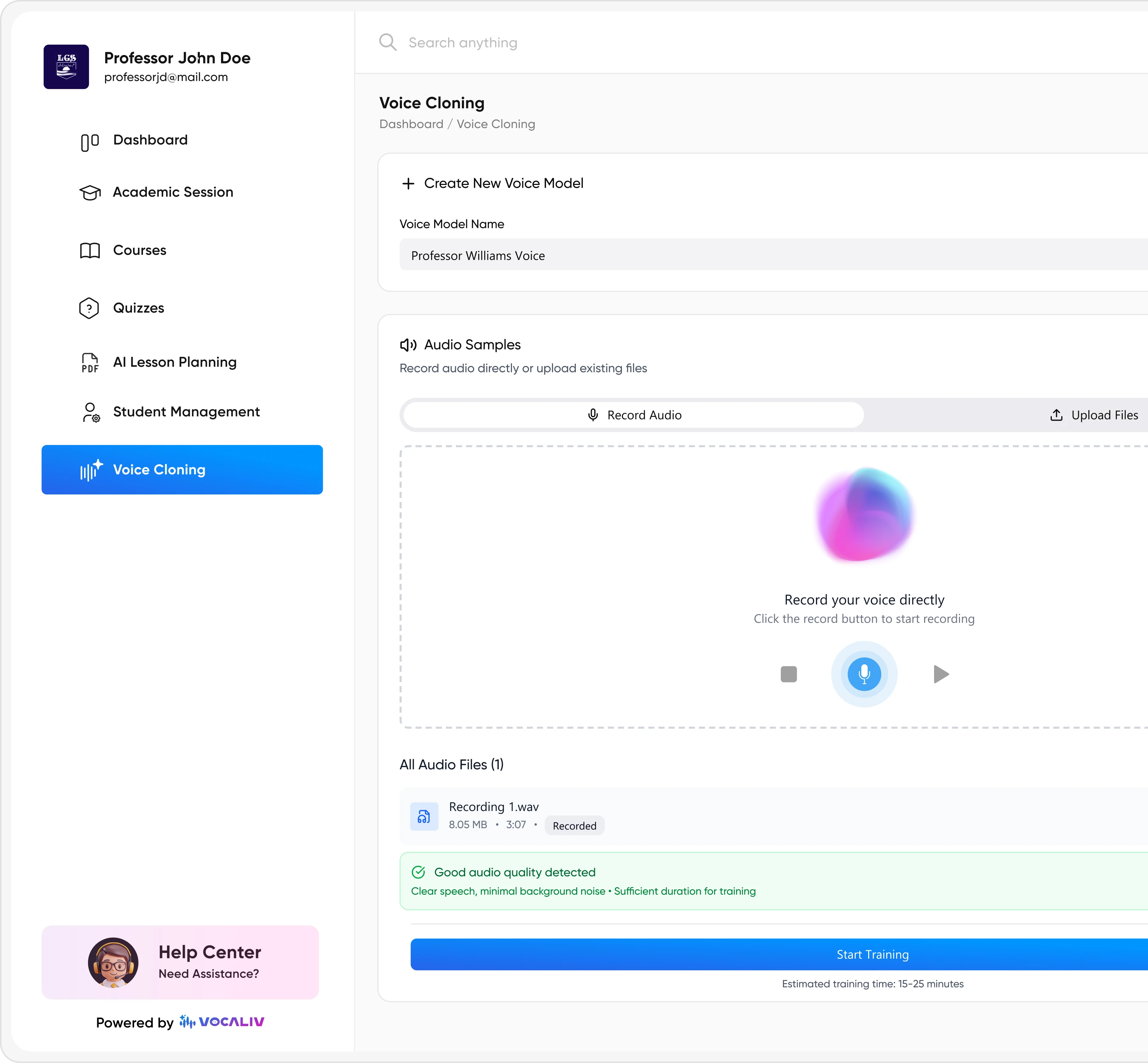
Where appropriate, voice cloning can help deliver AI-assisted course content in a familiar HR, L&D, well-being or occupational-health educator voice.
Start with a structured employee well-being and mental-health template, add your real policies, support resources and workplace scenarios, and give employees and managers a clearer way to recognize risk, start supportive conversations and connect people with appropriate help.