Help healthcare teams reduce avoidable infection risks by building consistent habits around standard precautions, hand hygiene, personal protective equipment, respiratory hygiene, environmental cleaning, safe equipment handling and early escalation. Use this ready-to-customize training template as a practical IPC foundation, then align the examples, precautions, reporting routes and role-specific procedures to your facility in Vocaliv.
Infection prevention and control depends on consistent action at the point of care. Staff need to understand how infections can spread, which precautions apply routinely, when additional controls may be required, how to use approved protective measures and when to stop, isolate, report or escalate a concern.
This template provides a practical foundation for infection prevention and control. It covers transmission awareness, standard precautions, hand and respiratory hygiene, appropriate use of PPE, transmission-based precautions, sharps and exposure prevention, environmental and equipment hygiene, waste and linen awareness, incident reporting, occupational health and outbreak readiness.
A suggested eight-module structure that can be adapted to your healthcare setting, workforce, patient population, IPC programme and local regulatory requirements.
Introduce the purpose of IPC, the shared responsibility for preventing healthcare-associated infection and the basic idea of transmission routes and opportunities for interruption. Emphasize that learners should follow current facility policies and seek IPC or clinical guidance when a situation is unclear or outside their role.
Explain standard precautions as the baseline for care and show how staff should assess the task, likely exposure and environment before acting. Connect this to approved practices for hand hygiene, PPE, respiratory hygiene, sharps, equipment, cleaning, linen, waste and safe handling of body fluids or contaminated materials.
Reinforce when hand hygiene is required according to local policy and accepted IPC guidance, along with correct access to approved hand-hygiene products. Include respiratory hygiene and source-control expectations, cough etiquette and prompt action when respiratory symptoms or transmission concerns are identified.
Help learners understand why PPE is selected according to anticipated exposure and task risk. Cover the importance of using approved PPE, following local donning and removal procedures, avoiding unnecessary or incorrect use, and performing hand hygiene at the required points. Detailed competency steps should remain aligned to facility policy and supervised training where required.
Introduce contact, droplet, airborne or other additional precautions at a high level and explain how staff should respond to signage, room or placement requirements, visitor guidance and escalation instructions. Keep disease-specific and procedure-specific controls aligned to current facility policy, public-health advice and specialist IPC direction.
Build awareness around preventing sharps injuries, handling reusable equipment safely, following approved cleaning and disinfection processes, managing linen and waste correctly, and keeping clean and contaminated items separated. Reinforce that device-specific, chemical-specific and waste-stream procedures must follow local instructions and competency requirements.
Explain what staff should do after a suspected exposure, sharps injury, splash, PPE failure or other IPC incident: stop the task when needed, take immediate actions defined by local policy, report promptly and contact the appropriate occupational health, clinical or IPC pathway. Avoid asking staff to self-assess or delay reporting because the exposure appears minor.
Bring the course together by helping learners recognize unusual clusters, recurring IPC gaps or changes in risk, understand the role of surveillance and audit, follow temporary outbreak controls and contribute to safer practice through feedback, reporting, coaching and continuous improvement.
Build a shared foundation for reducing transmission risk, using precautions consistently and responding quickly when an IPC concern appears.
Give staff a clear baseline for hand hygiene, PPE, respiratory hygiene, sharps, equipment, cleaning and other standard precautions across everyday care activities.
Teach staff to reassess tasks, environments and patient situations when exposure risk changes instead of relying only on routine or habit.
Connect PPE and transmission-based precautions to the risk they are designed to control, while reinforcing local signage, procedures and specialist IPC guidance.
Reinforce safe handling of sharps, equipment, surfaces, linen, waste and contaminated materials so staff know when to stop and use an approved process.
Help workers know where to report exposures, PPE failures, infection-control incidents or suspected transmission concerns and why early escalation matters.

By the end of the training, learners should be able to:
Use one core IPC template, then emphasize the exposure risks, precautions, equipment, work environment and escalation responsibilities each audience is most likely to encounter.
| Audience | What to emphasize |
|---|---|
| Nursing / bedside clinical teams | Standard and transmission-based precautions, hand hygiene, PPE, patient-care equipment, isolation practices, sharps safety, exposure reporting and care-area-specific IPC procedures. |
| Medical / advanced clinical staff | Risk assessment, procedure-related exposure, PPE, transmission precautions, device and equipment safety, escalation, outbreak controls and clinical leadership expectations within local policy. |
| Allied health / diagnostic teams | Role-specific patient contact, shared equipment, therapy or diagnostic spaces, hand hygiene, PPE, cleaning responsibilities, transport or transfer considerations and escalation. |
| Environmental / support services | Environmental cleaning, linen, waste, spills, PPE, safe movement of materials, isolation-area requirements, exposure reporting and boundaries between cleaning and clinical responsibilities. |
| Managers / IPC champions / supervisors | Compliance support, audit and feedback, staff coaching, exposure escalation, supply and workflow barriers, outbreak instructions, documentation and reinforcing a positive IPC culture. |
Start with the core IPC structure, then replace generic guidance with your facility policies, approved procedures, isolation instructions, PPE requirements, reporting routes and real-world scenarios.

Add your standard-precaution policy, hand-hygiene approach, PPE requirements, isolation signage, exposure pathways, equipment-cleaning procedures, waste and linen rules, occupational-health contacts and local escalation routes.
Use approved scenarios based on recurring questions, audit findings, anonymized incident themes, equipment issues, PPE challenges, isolation misunderstandings and workflow interruptions that staff actually encounter.
Create short assessments around standard precautions, hand hygiene, PPE, transmission-based precautions, sharps safety, environmental hygiene, exposure reporting and outbreak awareness.
Prepare an instructor-led version for new-hire orientation, annual IPC refreshers, unit briefings, outbreak updates, contractor training or targeted improvement sessions.
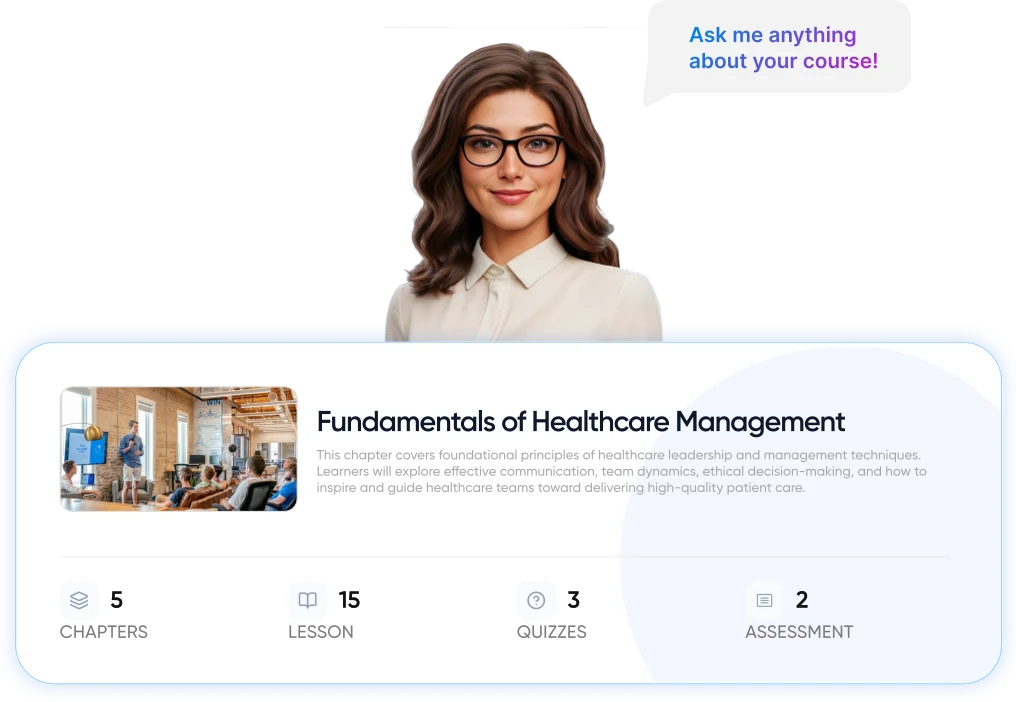
Let learners ask questions based on the approved training content, IPC policies and procedures you provide. The AI Coach can support learning and reinforcement, while live exposure management, isolation decisions, outbreak response, clinical advice and case-specific infection-control decisions remain with qualified professionals and the appropriate IPC or clinical team.
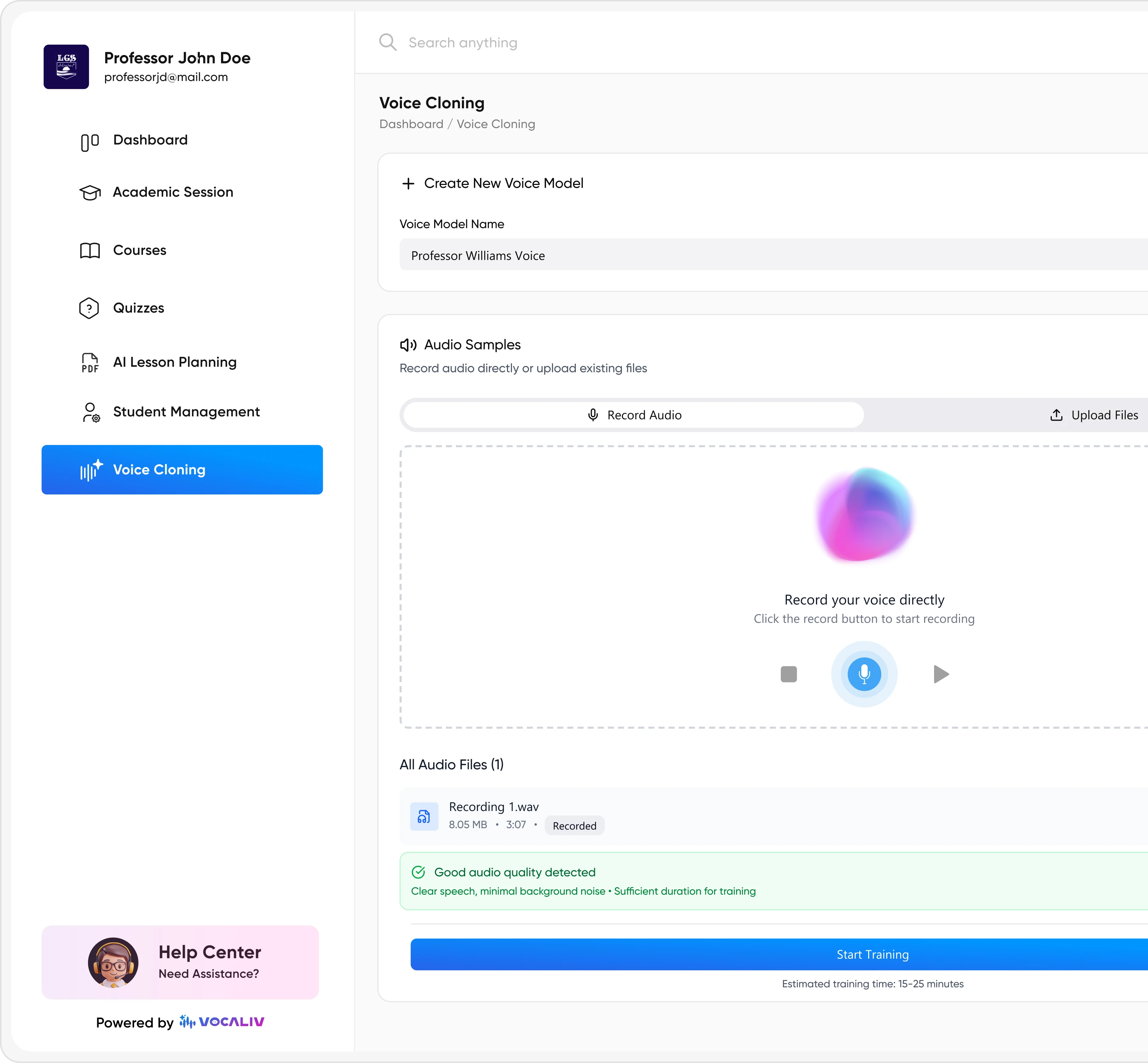
Where appropriate, voice cloning can help deliver AI-assisted course content in a familiar infection-prevention educator, clinical leader, occupational-health or training facilitator voice.
Start with a structured IPC template, add your own precautions, procedures, reporting routes and workplace scenarios, and give staff a clearer way to recognize infection risk and act consistently.