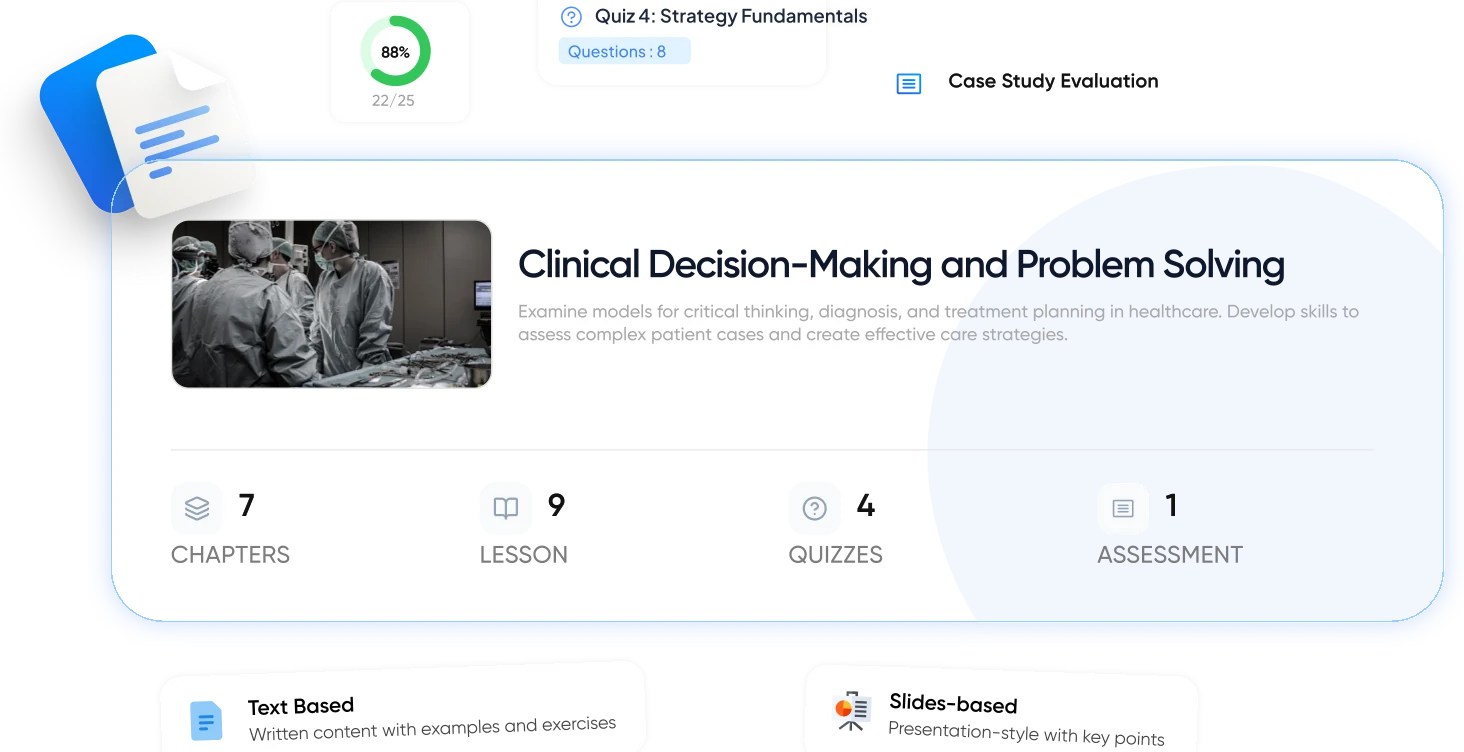
Help healthcare teams recognize clinical risk, strengthen safety behaviors and respond consistently when something does not look right. Use this ready-to-customize training template to cover safety culture, human factors, risk recognition, communication, handovers, safety checks, incident learning and improvement - then adapt every control and scenario to your own services in Vocaliv.
Patient safety depends on more than individual attention. Safe care is shaped by systems, workload, communication, equipment, environment, team coordination, supervision and the way organizations learn from risk.
This template provides a practical foundation for patient safety and clinical risk awareness. It covers safety culture, human factors and system thinking, recognizing and escalating risk, communication and handovers, high-risk processes and safety checks, incident and near-miss reporting, learning from events, patient and family involvement, and continuous improvement.
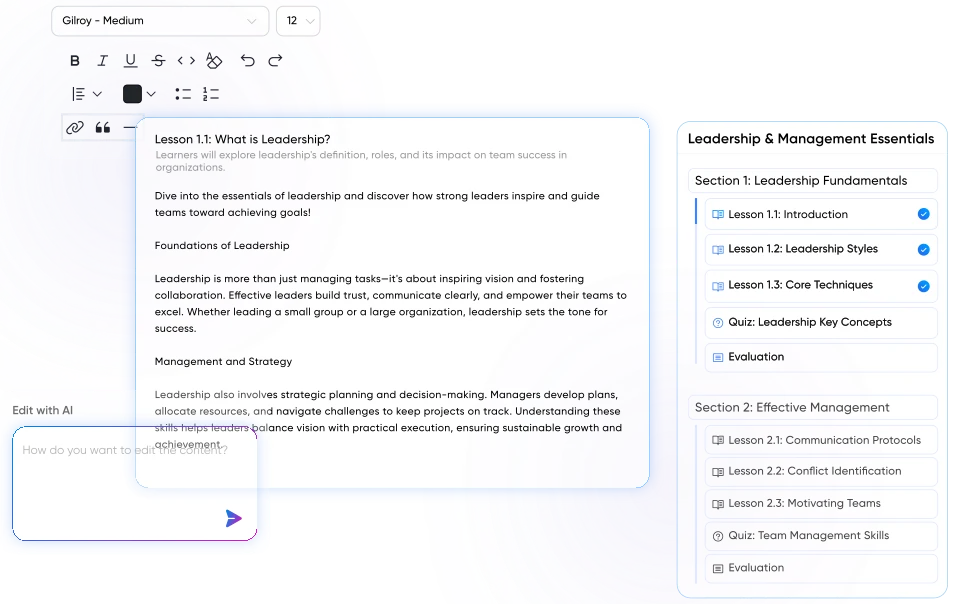
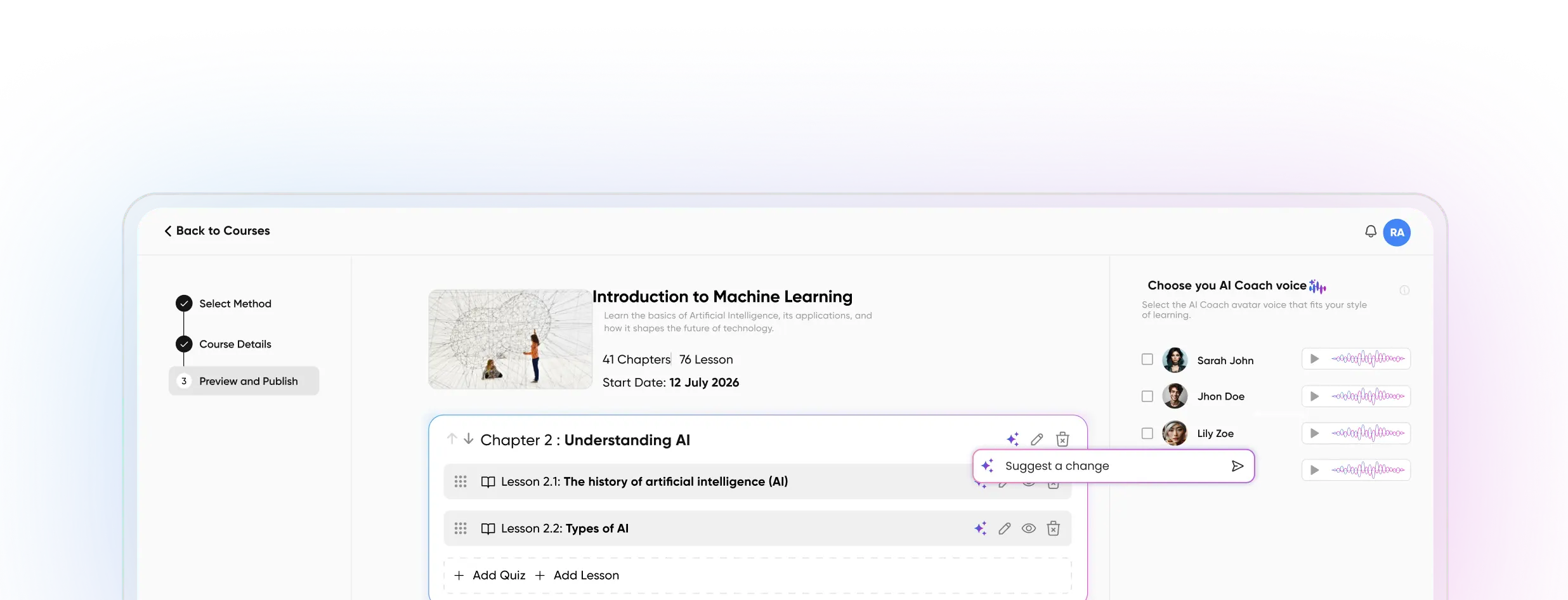
A suggested eight-module structure that can be adapted to your care setting, clinical governance framework, workforce, services and local regulatory requirements.
Introduce patient safety, preventable harm, clinical risk and the shared responsibility for safe care. Explain how policies, supervision, environment, systems and team behavior interact, and reinforce that staff should use approved procedures and seek help when a situation is outside their role or competence.
Show how workload, interruptions, fatigue, communication gaps, equipment, environment, assumptions and process design can influence safety. Use a systems perspective to move beyond blame and help learners identify how multiple factors can combine to create risk.
Help learners notice changes, warning signs, unclear instructions, mismatched information and situations that do not fit expectations. Reinforce the use of local escalation pathways, clinical review processes and emergency procedures rather than delaying action or working beyond role boundaries.
Build practical habits for clear handovers, closed-loop communication, read-backs or confirmation where required, asking clarifying questions and communicating concerns respectfully. Emphasize that local handover tools and escalation protocols should be followed consistently.
Explore why standardized checks, identity verification, documentation, equipment checks, medication safeguards, procedure-specific controls and other local safety barriers matter. Keep detailed clinical steps aligned to current organizational policy, professional scope and approved competency training.
Explain the purpose of reporting patient-safety incidents and near misses, the importance of timely factual documentation and how organizations use event information to identify patterns and improve systems. Reinforce that staff should preserve confidentiality and follow approved reporting and escalation routes.
Highlight respectful communication, listening to patient or family concerns, confirming understanding and supporting involvement in safety where appropriate. Show how patients and families may notice changes, discrepancies or risks and why concerns should be taken seriously and escalated through the right channels.
Bring the training together by helping learners identify practical safety actions in their own work area: following controls, speaking up, reviewing recurring risks, participating in improvement, learning from events and knowing when to involve senior clinical, quality or risk-management support.
Build a shared language for recognizing risk, communicating concerns and using safety systems consistently across clinical teams and services.
Help staff notice risk earlier, question unexpected information, check assumptions and use approved safeguards before harm occurs.
Reinforce clear handovers, confirmation, respectful challenge and prompt escalation when information is incomplete or a situation appears unsafe.
Help teams understand why reporting matters, how factual event information supports improvement and why learning should focus on system conditions as well as individual actions.
Show how workload, interruptions, environment, equipment, fatigue, team dynamics and process design can shape risk so staff can recognize contributing conditions earlier.
Connect policies, checklists, identity checks, documentation standards, equipment controls and other local safeguards to the risks they are designed to reduce.

By the end of the training, learners should be able to:
Use one core patient-safety template, then emphasize the risks, safety controls, communication needs and escalation responsibilities each audience is most likely to encounter.
| Audience | What to emphasize |
|---|---|
| Nursing / bedside clinical teams | Situational awareness, patient identification, communication and handover, escalation, local safety checks, incident reporting, supervision and the clinical risks most relevant to the care area. |
| Medical / advanced clinical staff | Diagnostic and treatment-risk awareness, team communication, escalation, clinical decision support, procedural safety controls, documentation, supervision and learning from incidents within local governance requirements. |
| Allied health professionals | Role-specific clinical risks, patient identification, equipment or therapy checks, communication across teams, handover, escalation and professional scope. |
| Clinical leaders / supervisors | Safety culture, speaking up, workload and human factors, escalation support, event review, risk ownership, learning systems, team communication and improvement leadership. |
| Quality / patient-safety / risk teams | Incident trends, risk controls, systems analysis, learning from near misses, improvement methods, staff engagement, patient and family involvement and translating governance requirements into frontline practice. |
Start with the core patient-safety structure, then replace generic guidance with your clinical governance framework, local safety controls, escalation routes, incident systems and real-world scenarios.

Add your patient-safety policy, risk-management approach, escalation criteria, handover standard, incident-reporting process, local safety checks, role boundaries and relevant clinical governance contacts.
Use approved anonymized case themes, recurring near misses, handover problems, equipment concerns, escalation delays and process gaps to make the training feel relevant to local practice.
Create short assessments around risk recognition, human factors, communication, escalation, safety controls, incident reporting and learning from near misses.
Prepare an instructor-led version for patient-safety orientation, clinical education, quality-improvement workshops, manager briefings or annual refresher training.
Let learners ask questions based on the approved training content, policies and procedures you provide. The AI Coach can support learning and reinforcement, while live clinical decisions, diagnosis, treatment, emergency direction and case-specific risk judgments remain with qualified professionals and the appropriate clinical team.
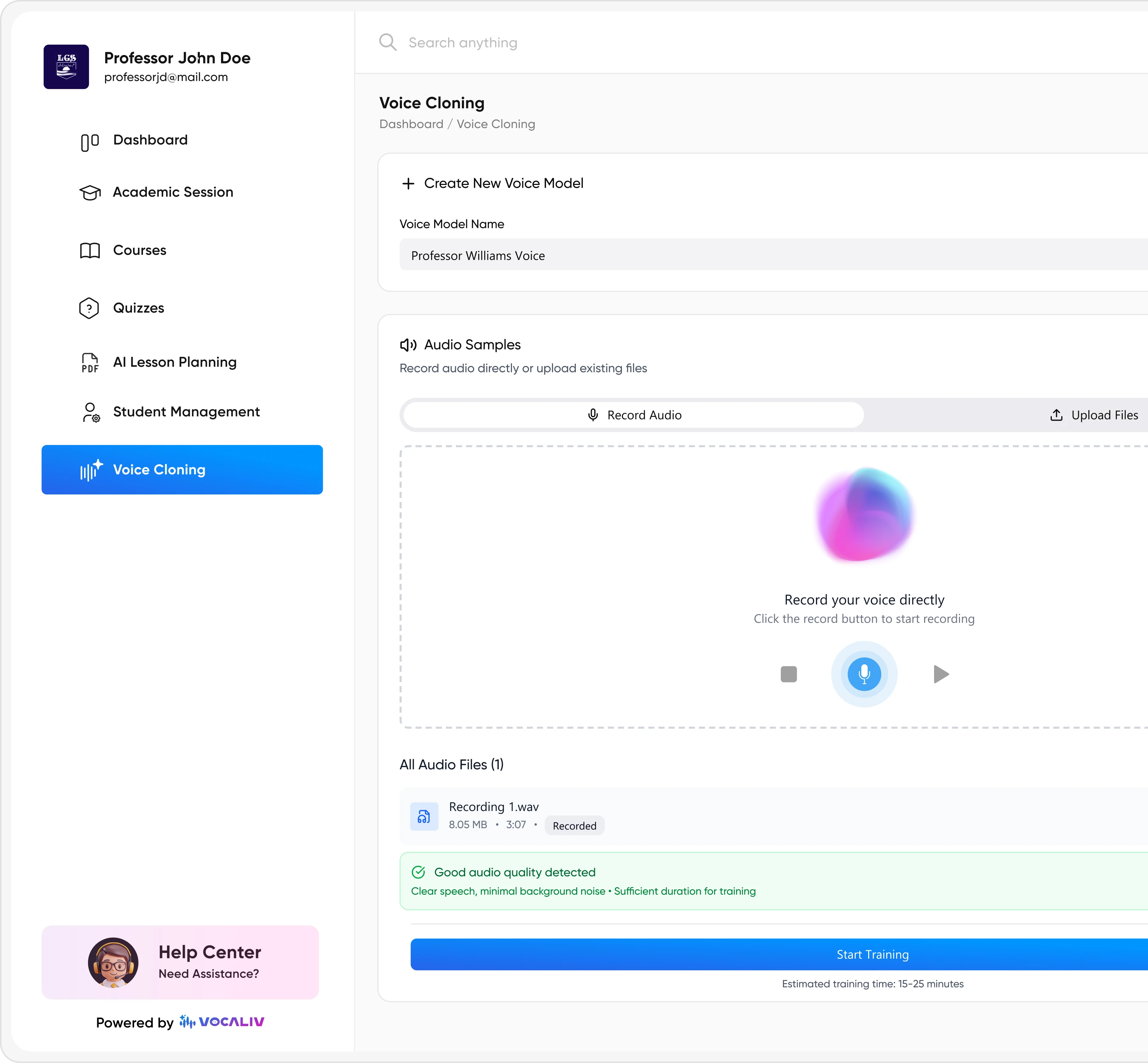
Where appropriate, voice cloning can help deliver AI-assisted course content in a familiar patient-safety educator, clinical leader, quality or training facilitator voice.
Start with a structured patient-safety and clinical-risk template, add your real safety controls, escalation routes and workplace scenarios, and give teams a clearer way to recognize risk, communicate concerns and learn from events.