Health, Safety & Compliance Course Template

HSE / Workplace Health & Safety Induction Template

Give new employees, contractors and other starters a clear introduction to how health and safety is managed in your workplace. Use this ready-to-customize induction template to cover site rules, hazards, risk controls, PPE, emergency procedures, incident and near-miss reporting, safe work practices and worker responsibilities - then adapt every example to your own sites in Vocaliv.

Skills / Topics
  • Safety responsibilities
  • Site rules
  • Hazard recognition
  • Risk controls
  • PPE
  • Safe work practices
  • Emergency response
  • Incident reporting
  • Near-miss reporting
  • Worker participation
Template Overview

Give every new starter a clear safety baseline before they begin work.

A useful workplace safety induction does more than introduce policies. It helps people understand the hazards they may encounter, the controls already in place, the behaviors expected of them, the emergency actions they must follow and the routes for reporting anything unsafe. The strongest inductions are specific to the actual workplace, role and level of risk rather than relying on generic safety messages alone.

This template provides a practical foundation for HSE and workplace health and safety induction. It covers safety responsibilities and site rules, hazard identification and risk controls, PPE and safe work practices, common workplace hazards, emergency response, reporting hazards and near misses, and the checks employees should make before starting unfamiliar or changed work.

Structure
8 modules
Audiences
5 workforce tracks
Scope
Hazards, controls & emergency response
Delivery
Fully customizable in Vocaliv
What's Included

What's Included in This Training Template

A suggested eight-module structure that can be adapted to your workplace, HSE management system, site hazards, workforce and local legal requirements.

  1. Module 1

    Safety Culture, Responsibilities & Your Role

    Introduce how health and safety is managed in the organization, the responsibilities of workers and managers, the importance of following approved procedures and the expectation to raise concerns when work appears unsafe. Clarify local rights, duties and stop-work or escalation processes using the organization's own policy and applicable law.

  2. Module 2

    Know Your Workplace: Site Rules, Access & Safety Information

    Orient learners to the workplace or site: access and restricted areas, traffic and pedestrian routes, welfare facilities, signage, housekeeping expectations, safety contacts and where approved procedures and emergency information can be found.

  3. Module 3

    Hazard Identification, Risk Assessment & Controls

    Help learners recognize hazards in routine and non-routine work, understand the purpose of risk assessment and see how controls are selected. Introduce the hierarchy of controls at an awareness level and reinforce that workers should follow approved controls rather than improvise substitutes.

  4. Module 4

    Safe Work Practices, PPE & Equipment

    Explain the importance of using safe work procedures, required personal protective equipment, guards, isolation controls, permits and equipment checks where applicable. Reinforce that people should only use equipment or perform tasks they are trained, competent and authorized to carry out.

  5. Module 5

    Common Workplace Hazards & Health Risks

    Introduce the hazards most relevant to the workplace, such as slips and trips, manual handling, ergonomics, moving vehicles, noise, chemicals, electricity, heat, work at height or machinery. Replace this generic list with the hazards identified in your own risk assessments and site information.

  6. Module 6

    Emergency Preparedness, Evacuation & First Response

    Explain alarms, evacuation routes, assembly points, emergency contacts, first-aid arrangements and site-specific actions for fire, spills or other foreseeable emergencies. Make clear that learners should follow approved emergency procedures and instructions rather than rely on general training during a live emergency.

  7. Module 7

    Reporting Hazards, Near Misses, Incidents & Injuries

    Show learners how and when to report unsafe conditions, near misses, incidents, injuries or symptoms using the organization's approved channels. Reinforce prompt reporting, preserving personal safety, cooperating with follow-up and not carrying out an investigation unless that is part of their role.

  8. Module 8

    Starting and Continuing Work Safely

    Bring the induction together with a simple pre-work check: understand the task, confirm training and authorization, identify hazards and controls, check required PPE and equipment, know the emergency and reporting arrangements, and stop to ask for guidance when the task, conditions or controls are unclear or have changed.

Why Your Workforce Needs Health & Safety Induction Training

Give every starter a consistent safety foundation, make site expectations easier to understand and help people know what to do when something looks unsafe or unfamiliar.

Create a consistent safety baseline

Give employees, contractors and temporary workers a common understanding of site expectations, key hazards, controls, emergency arrangements and reporting routes before they begin work.

Make hazards and controls easier to recognize

Help learners connect safety rules to real workplace conditions so they know what to look for, which controls apply and when a task requires additional instruction or supervision.

Improve emergency readiness

Make alarms, exits, assembly points, emergency contacts and first-aid arrangements familiar before an emergency occurs.

Encourage earlier reporting and worker participation

Show people how to raise hazards, near misses and safety concerns promptly so issues can be assessed and addressed through the organization's safety process.

Clarify when people should stop and seek guidance

Reinforce that unfamiliar work, missing controls, changed conditions or unclear instructions should trigger the organization's approved pause-and-escalate process rather than improvisation.

Two workers in hard hats and safety glasses on site, one pointing something out while the other checks it against the induction paperwork
Learning Outcomes

What learners will be able to do

By the end of the training, learners should be able to:

  • Explain their basic health and safety responsibilities and identify where to find the organization's approved safety information and contacts.
  • Recognize common workplace hazards and describe why site-specific risk assessments and approved controls matter before work begins.
  • Follow applicable site rules, safe work procedures and PPE requirements within the limits of their training, competence and authorization.
  • Use a simple pre-work check to identify when a task, condition, control or instruction is unfamiliar, missing or has changed and needs escalation.
  • Identify the workplace emergency alarm, evacuation route, assembly arrangements and first-aid or emergency contacts relevant to their site.
  • Report hazards, near misses, incidents, injuries or safety concerns through the organization's approved channels without attempting tasks outside their role.
  • Explain why induction is only one part of safe work and recognize when additional task-specific training, supervision, permits, licenses or competency checks are required.
Customize by Workforce

Customize the Training by Workforce / Role

Use one core induction template, then emphasize the hazards, controls, access rules, emergency procedures and responsibilities each workforce group is most likely to encounter.

AudienceWhat to emphasize
New employees / site transfersSite orientation, role responsibilities, key hazards, safe work rules, PPE, emergency arrangements, reporting routes, questions and when additional task-specific training is required.
Contractors / temporary workersAccess rules, host-contractor coordination, permit and authorization requirements, restricted areas, site hazards, emergency arrangements, reporting expectations and who controls the work.
Office / administrative teamsErgonomics, slips and trips, electrical safety awareness, fire and evacuation procedures, first-aid arrangements, safe workstation practices and reporting hazards or incidents.
Operations / warehouse / manufacturing teamsVehicle and pedestrian segregation, machinery and equipment hazards, manual handling, PPE, housekeeping, chemicals or noise where relevant, safe work procedures and task authorization.
Field / maintenance / construction teamsChanging site conditions, permit-to-work or isolation systems where applicable, work at height, tools and equipment, contractor interfaces, environmental conditions, emergency plans and stronger task-specific competency requirements.
Customize With Vocaliv

Customize This HSE / Workplace Safety Induction Template With Vocaliv

Start with the core induction structure, then replace generic examples with your real sites, hazards, procedures, emergency information, PPE requirements and reporting routes.

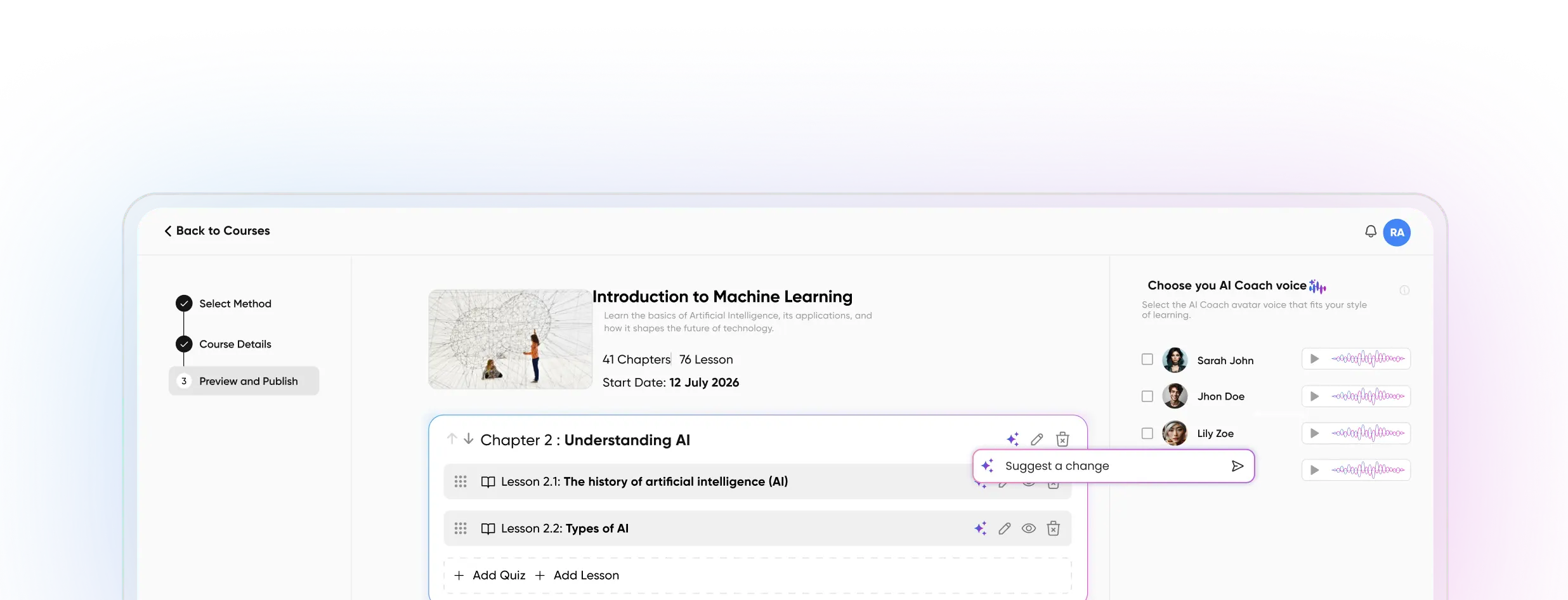
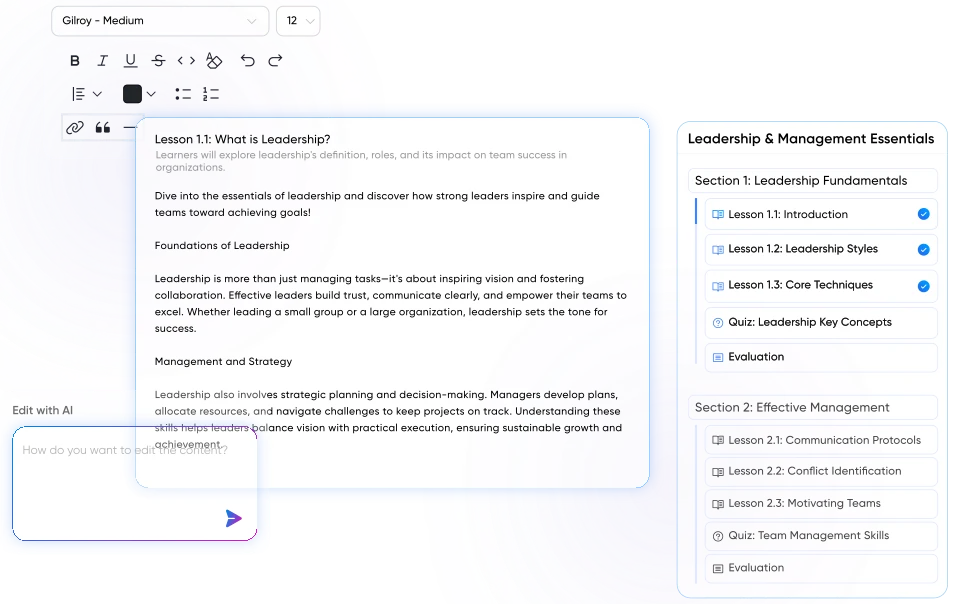
The Vocaliv course editor with the template's modules being rewritten around the organization's HSE policy, site rules and reporting channels
1

Align the course to your HSE management system and site rules

Add your HSE policy, responsibilities, local procedures, site rules, reporting channels, safety contacts, risk-control language and escalation routes so learners receive guidance that matches the workplace they are entering.

2

Add site-specific maps, visuals and scenarios

Use approved photographs, floor plans, assembly-point maps, PPE examples, signage and anonymized incident or near-miss themes to make the induction concrete and easier to recognize on site.

3

Generate knowledge checks and safety practice

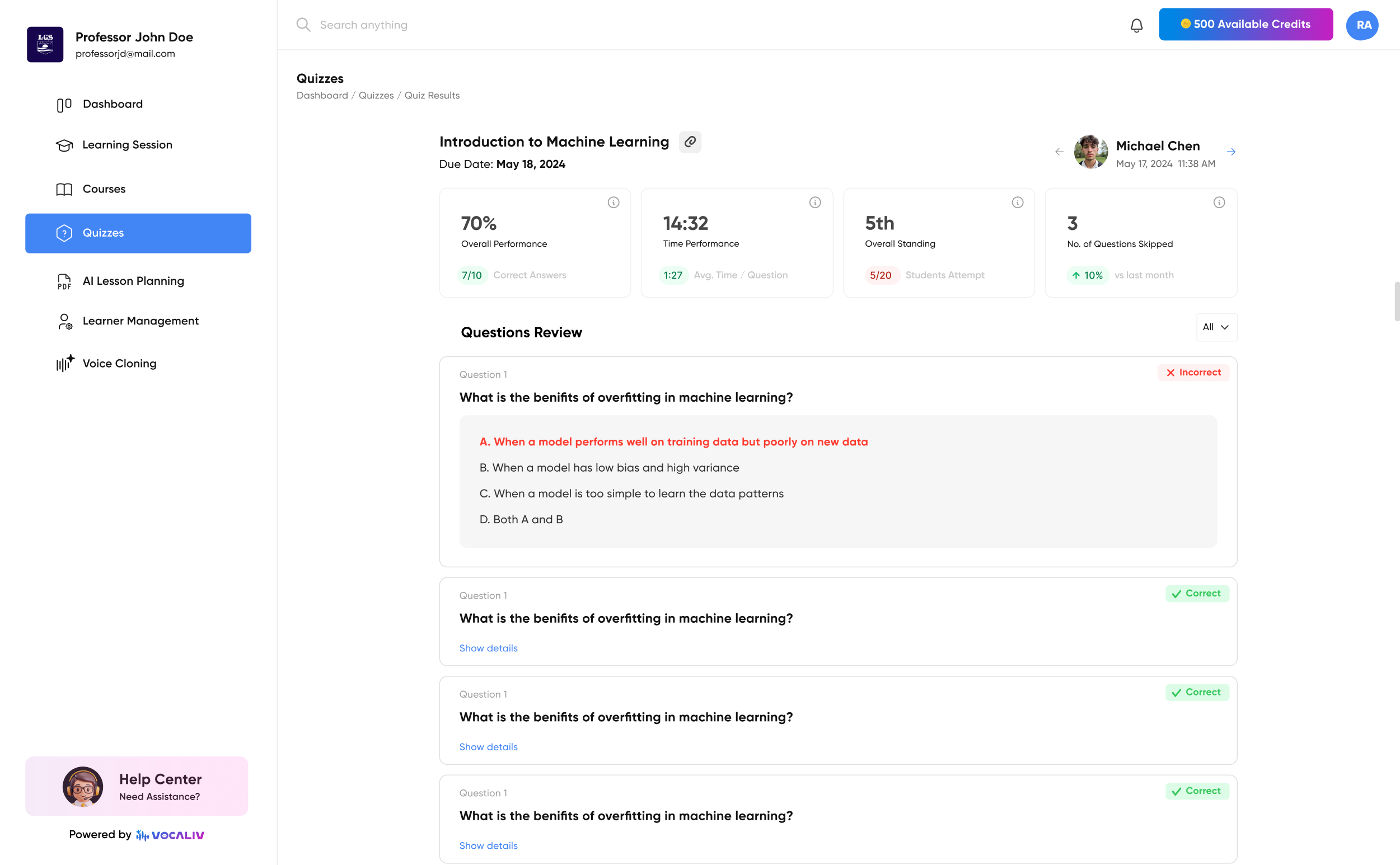
Create short assessments around hazards, controls, PPE, emergency response, reporting, restricted areas and what to do when a task or condition is unclear.

4

Turn the induction into presentation-ready slides

Prepare an instructor-led version for site induction, new-hire onboarding, contractor briefings, pre-start sessions or periodic refresher training.

5

Use Vocaliv AI Coach where appropriate

Let learners ask questions based on the approved HSE content and procedures you provide. The AI Coach can support learning and reinforcement, but live emergency instructions, medical decisions, permits, technical safety judgments and site-specific authorization should remain with designated competent people.

6

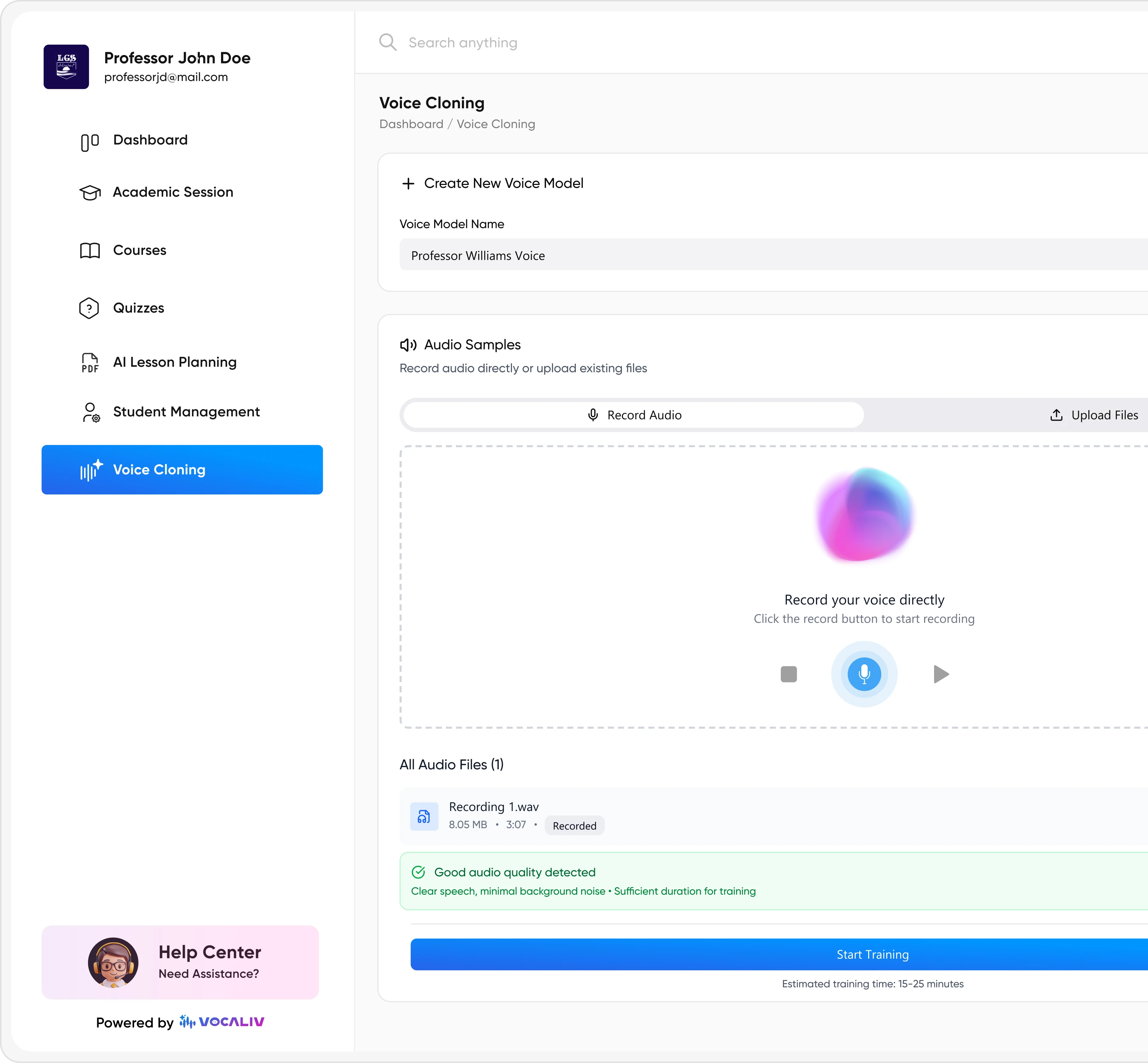
Use your trainer's voice

Where appropriate, voice cloning can help deliver AI-assisted induction content in a familiar HSE, operations or training facilitator voice.

FAQ

Frequently Asked Questions

Give Every New Starter a Safer, Clearer First Day

Start with a structured HSE induction template, add your real workplace hazards, controls, emergency procedures and site rules, and give employees and contractors a practical safety foundation before work begins.

Chat with us 👋