A ready-to-customize course that helps managers read the numbers behind everyday business decisions, without turning them into accountants. Swap in your own reports and terminology in Vocaliv.
Managers shape revenue, costs, headcount and pricing every day, yet without a finance background they struggle to read reports, explain a budget variance or make the case for a decision.
This template gives them that grounding: eight practical modules built for non-finance leaders, ready to fill with your own reports, metrics and planning cycle.
A suggested eight-module structure that can be shortened, expanded or adapted by role.
Introduce the purpose of financial information and show how everyday management decisions affect revenue, costs, profitability, cash and business performance.
Explain revenue, cost of sales, gross profit, operating expenses and operating profit in practical terms. Help managers read a P&L and identify the main drivers behind changes in performance.
Clarify what the balance sheet shows, why assets and liabilities matter, and why profit is not the same as cash. Introduce the cash flow statement and the impact of timing, receivables, payables and inventory where relevant.
Help managers distinguish fixed and variable costs, understand margin, recognize cost drivers and use simple break-even thinking when evaluating pricing, volume or operating decisions.
Show how budgets translate plans into financial expectations and how forecasts update the view as conditions change. Reinforce the manager's role in assumptions, ownership and timely updates.
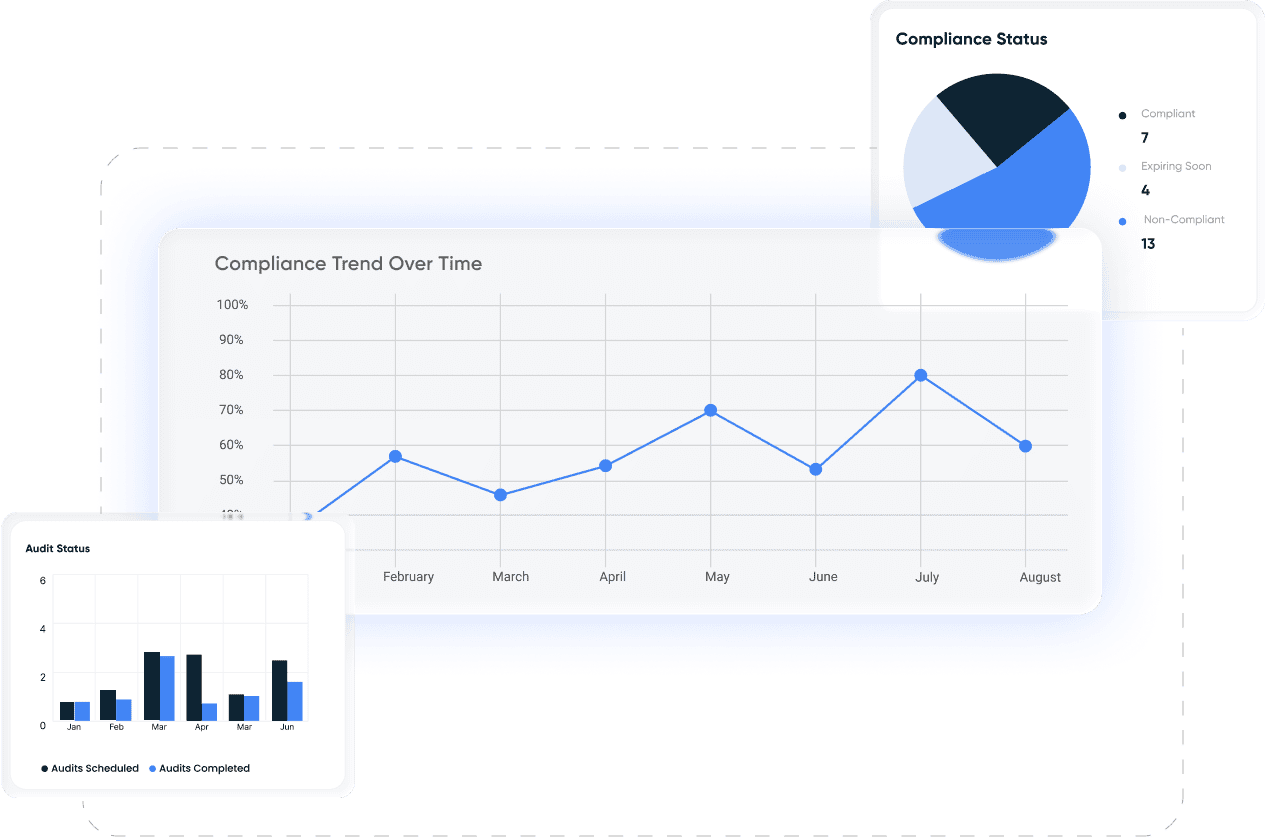
Teach managers to compare actual results with budget or forecast, investigate the reasons behind meaningful variances and use relevant financial KPIs to focus conversations on performance drivers.
Introduce practical ways to evaluate proposals using costs, expected benefits, return on investment, payback and risk. Emphasize clear assumptions rather than false precision.
Bring the concepts together through decisions about hiring, pricing, suppliers, projects, capacity and cost control. Help managers communicate financial assumptions and trade-offs clearly with finance and leadership.
Give managers the financial confidence to make stronger decisions and have better conversations about performance.
Help managers understand the language of finance and connect financial reports to the operational decisions they control.
Move budgeting from a once-a-year finance exercise to an ongoing management responsibility built around clear assumptions and timely updates.
Show how pricing, hiring, capacity, suppliers, projects and cost choices can influence revenue, margin, cash and return.
Give managers a practical framework for comparing costs, benefits, risks and timing when resources are limited.
Help non-finance leaders ask better questions, explain assumptions and work more effectively with finance teams during planning and performance reviews.

By the end of the training, learners should be able to:
Use one core template, then emphasize the financial decisions each audience actually makes.
| Audience | What to emphasize |
|---|---|
| Sales / commercial managers | Revenue quality, pricing, discounting, gross margin, sales mix, customer profitability and the financial impact of commercial decisions. |
| Operations managers | Cost drivers, productivity, capacity, working capital, supplier decisions, service levels and operational variance analysis. |
| HR / people managers | Headcount budgets, total employment cost, workforce planning, hiring business cases and the financial impact of people decisions. |
| Project / product managers | Project budgets, forecast updates, cost-to-complete, investment cases, ROI, payback, resource trade-offs and financial KPIs. |
| General / department managers | P&L ownership, budgets, forecasts, cash awareness, financial KPIs, business cases and cross-functional decision-making. |
Start with the structure, then adapt the course to your financial reports, management priorities and business model.

Replace generic terminology with your chart of accounts, P&L structure, budget cycle, approval process, financial KPIs and management reporting language.
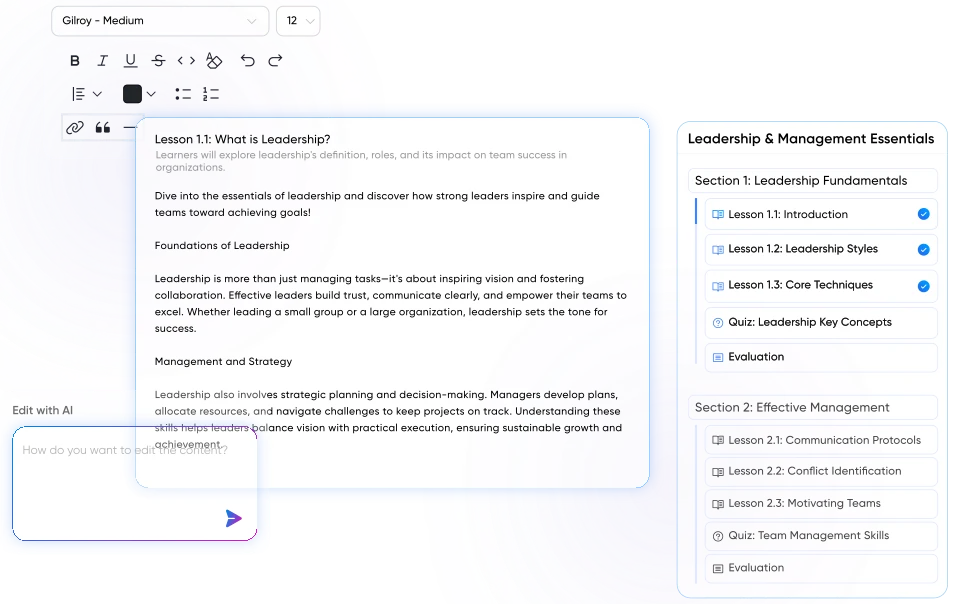
Use existing budget templates, dashboards, management reports and approved training material as inputs when building or refining the course.
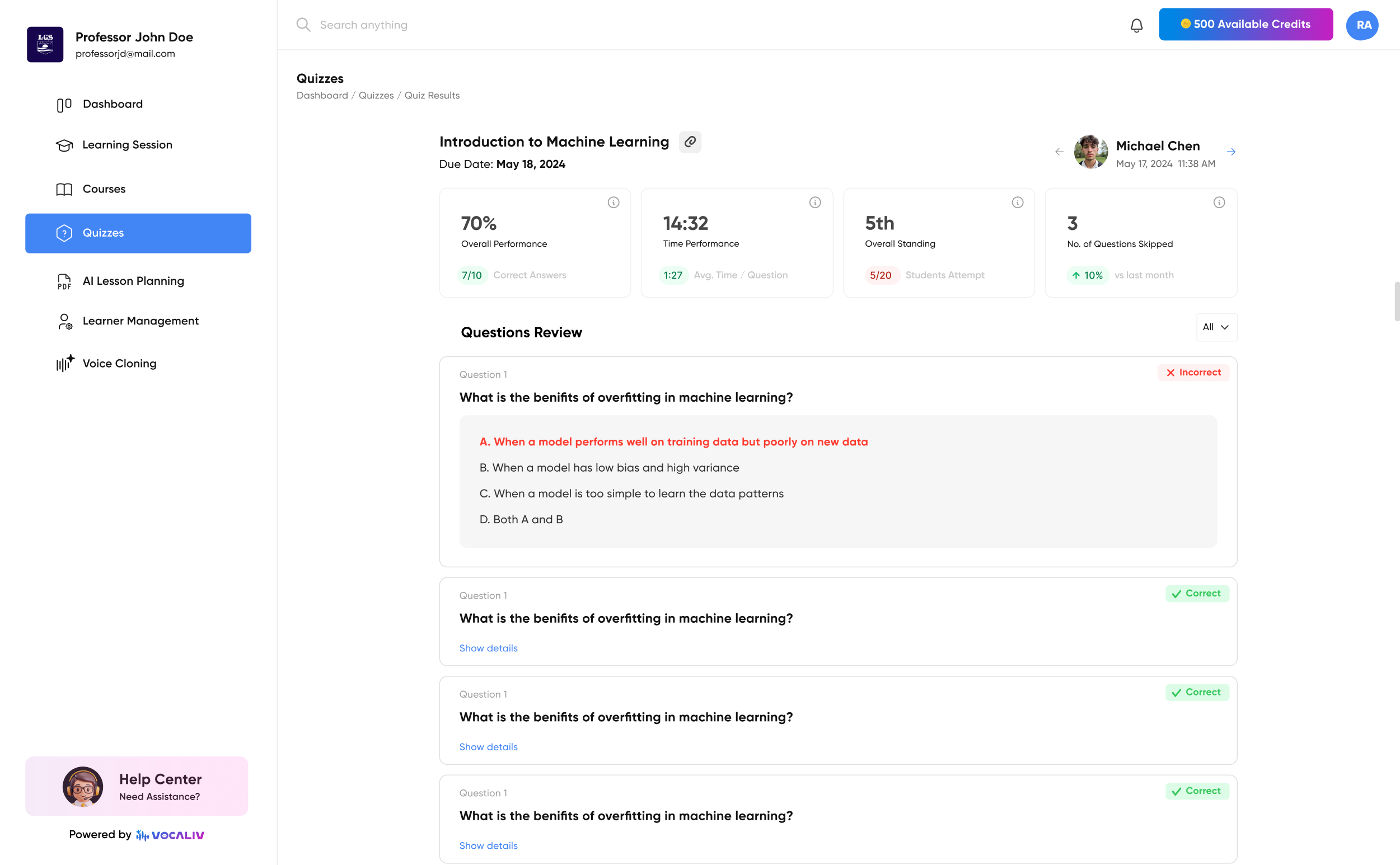
Create short assessments around P&L interpretation, budget variances, margin, cash flow and investment scenarios to reinforce understanding.
Prepare a facilitator-led version for manager onboarding, leadership programs, finance bootcamps or quarterly planning workshops.
Let learners interact with course content and ask questions based on the financial training material you provide.
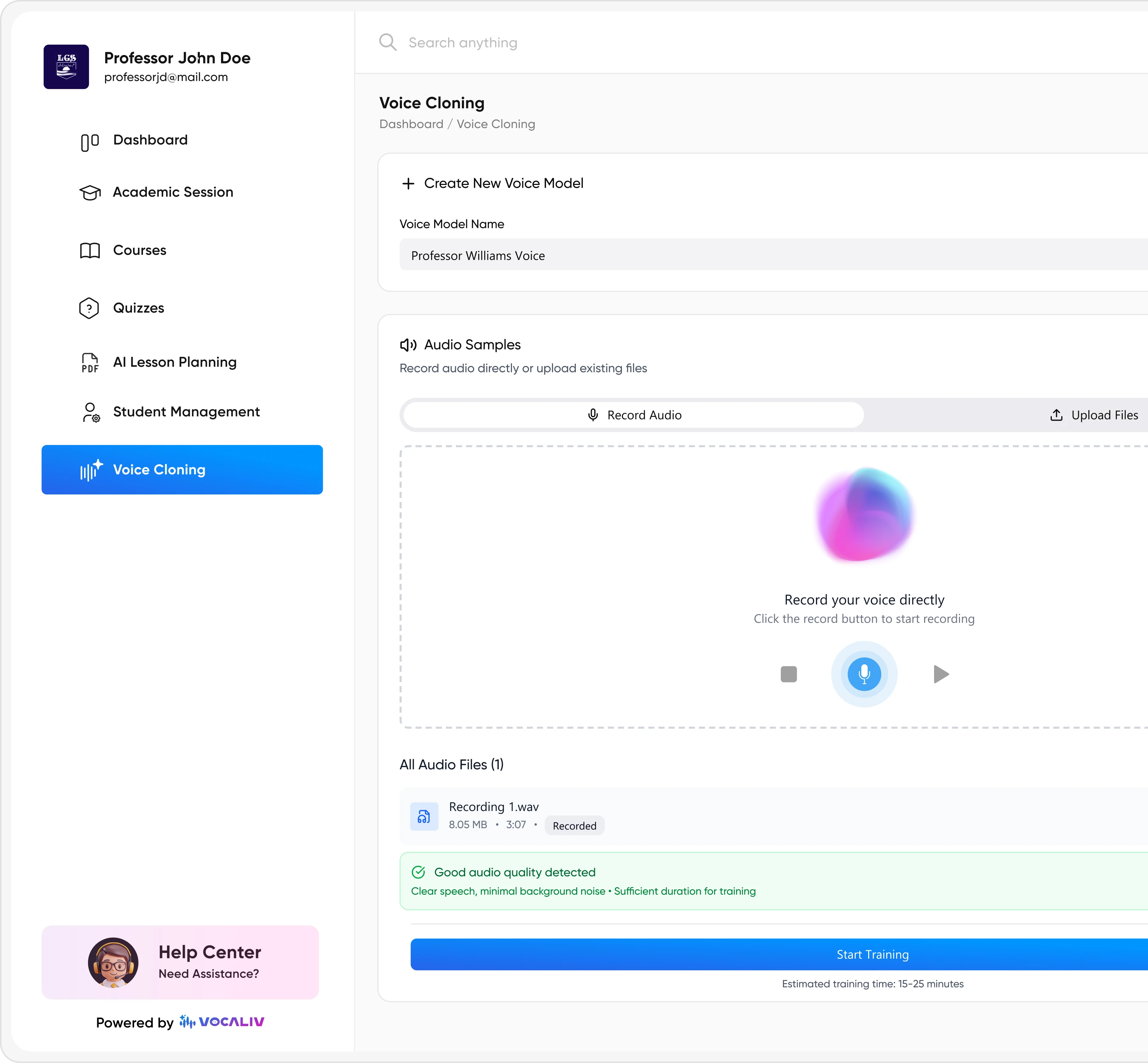
Where appropriate, voice cloning can help deliver AI-assisted course content in a familiar trainer or finance facilitator voice.
Start with a structured finance course template, add your financial reports, business scenarios and KPIs, and give managers a practical way to understand the numbers behind their decisions.