Leadership & Management Course Template

Leadership Fundamentals for New Managers Template

Help first-time managers make the shift from being strong individual contributors to leading through other people. Use this ready-to-customize training template to build practical skills in role clarity, communication, one-to-ones, delegation, feedback, coaching, accountability, performance conversations and team trust.

Skills / Topics
  • Leadership mindset
  • Role clarity
  • Communication
  • One-to-ones
  • Delegation
  • Accountability
  • Feedback
  • Coaching
  • Performance management
  • Team trust
Template Overview

Help new managers shift from doing great individual work to creating clarity, ownership and performance.

The first move into management changes what success looks like. New managers are no longer responsible only for their own output; they must set direction, communicate expectations, make decisions, support different people, delegate work, give feedback, handle performance issues and create an environment where the team can succeed.

This template provides a practical foundation for that transition. It introduces the new manager mindset, self-awareness, goal and expectation setting, one-to-one communication, delegation and accountability, feedback and coaching, performance conversations, motivation, trust and team culture. Organizations can replace the generic examples with their own manager standards, meeting rhythms, performance framework, escalation routes, values and role-specific scenarios.

Structure
8 modules
Audiences
5 learner tracks
Scope
First-time managers, team leads & supervisors
Delivery
Fully customizable in Vocaliv
What's Included

What's Included in This Training Template

A suggested eight-module structure that can be adapted to your management philosophy, workforce, team environment and internal people processes.

  1. Module 1

    Making the Shift From Individual Contributor to Manager

    Explore how the manager role changes the definition of success. Help learners move from personally solving every problem to setting direction, enabling others, making decisions and taking responsibility for the environment in which the team performs.

  2. Module 2

    Leadership Mindset, Self-Awareness & Credibility

    Help new managers understand how their behavior, communication style and consistency affect trust. Introduce self-awareness, emotional regulation, fairness, learning agility and the importance of leading by example.

  3. Module 3

    Setting Expectations, Goals & Priorities

    Teach managers to translate team goals into clear expectations, priorities, ownership and measures of success. Practice checking understanding, aligning on deadlines and resetting priorities when conditions change.

  4. Module 4

    Communication, One-to-Ones & Active Listening

    Build practical habits for regular one-to-ones, clear team communication and active listening. Show managers how to ask useful questions, surface concerns, adapt communication to different people and close loops on decisions and actions.

  5. Module 5

    Delegation, Ownership & Accountability

    Move beyond task assignment by teaching managers to define the outcome, level of authority, resources, checkpoints and decision boundaries. Reinforce follow-through and accountability without micromanaging or taking the work back too quickly.

  6. Module 6

    Feedback, Coaching & Employee Development

    Give managers a simple structure for timely, specific and balanced feedback. Introduce coaching questions, development conversations, recognition and practical ways to support employees in building capability and confidence.

  7. Module 7

    Managing Performance, Motivation & Difficult Conversations

    Help managers distinguish between unclear expectations, skill gaps, motivation issues and other barriers to performance. Practice addressing concerns early, documenting agreed actions and using the organization's HR or performance process when additional support is needed.

  8. Module 8

    Building Trust, Team Culture & Continuous Growth

    Show managers how everyday behavior shapes team culture. Cover psychological safety, inclusion, healthy challenge, collaboration, recognition, conflict awareness and the habit of reflecting on what the manager and team should improve next.

Why Your Team Needs Leadership Fundamentals Training

Give new managers a clearer operating system for leading people so they can create direction, build trust and address issues before reactive habits become the norm.

Make the role transition explicit

Help newly promoted managers understand that the behaviors that made them successful as individual contributors are not always the same behaviors required to lead a team.

Reduce the do-it-all management habit

Teach managers to delegate outcomes, create ownership and coach others instead of becoming the person who fixes every task, decision and problem.

Improve clarity and communication

Build consistent habits for setting expectations, running one-to-ones, listening, making decisions visible and keeping the team aligned on priorities.

Create healthier feedback and accountability habits

Give managers practical ways to recognize good work, address concerns early, coach for improvement and follow through on agreed commitments.

Build a stronger foundation for future leaders

Use one adaptable framework to establish common management expectations while giving new managers the tools, language and practice they need to keep developing.

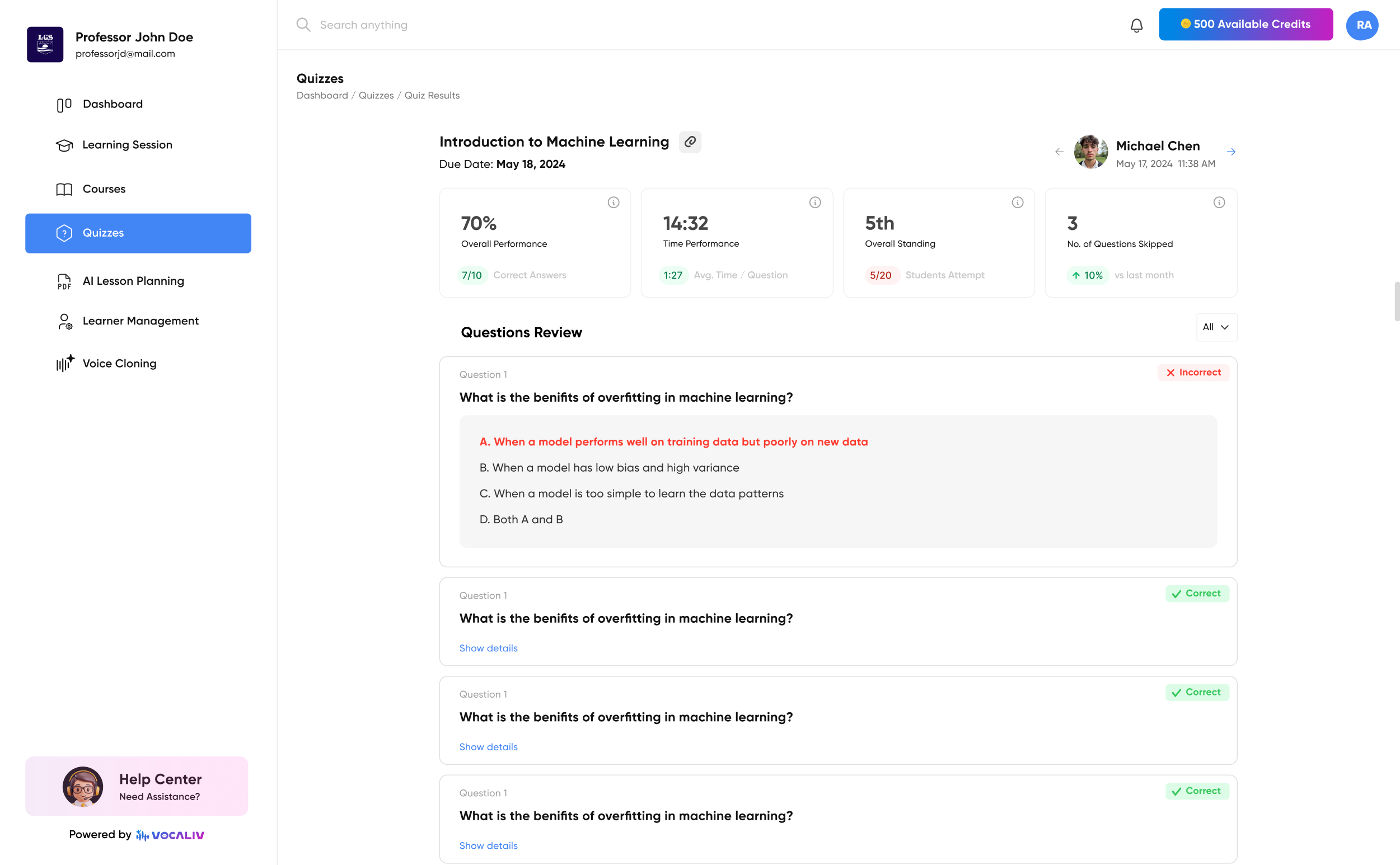
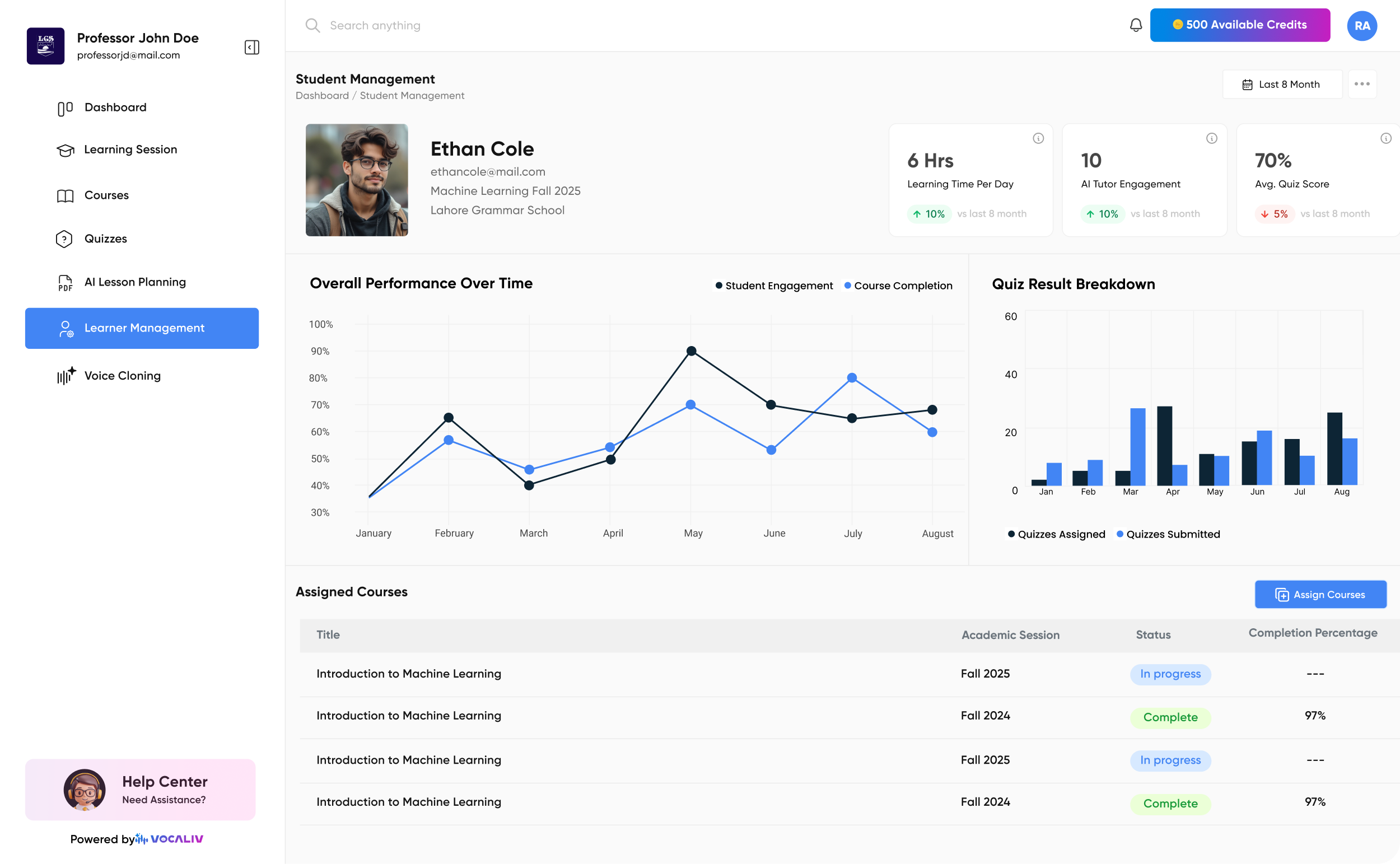
Learner management dashboard in Vocaliv showing one team member's engagement, quiz results and assigned leadership courses
Learning Outcomes

What learners will be able to do

By the end of the training, learners should be able to:

  • Explain how the manager role differs from individual contribution and identify the mindset shifts required to lead through other people.
  • Set clearer expectations by defining outcomes, priorities, ownership, deadlines and measures of success.
  • Use one-to-ones, active listening and clear communication to understand employee needs, remove ambiguity and maintain alignment.
  • Delegate work with appropriate authority, context, support and checkpoints while maintaining accountability.
  • Give timely, specific feedback and use coaching questions to help employees reflect, learn and improve.
  • Recognize common causes of performance problems and prepare an appropriate conversation, action plan or escalation path.
  • Build trust through consistency, fairness, follow-through, recognition and respectful handling of disagreement or mistakes.
  • Create a personal development plan for strengthening their own leadership habits, confidence and effectiveness over time.
Customize by Role

Customize the Training by Manager Role

Use one core new-manager template, then emphasize the decisions, team dynamics, operating rhythms and people-management responsibilities each audience is most likely to encounter.

AudienceWhat to emphasize
First-time people managersRole transition, expectation setting, one-to-ones, delegation, feedback, coaching, accountability, performance conversations and building trust with a new team.
Team leads / supervisorsDaily direction, shift or task coordination, handovers, frontline communication, fair work allocation, rapid feedback, escalation and maintaining standards under pressure.
Technical / functional specialistsMoving from expert to leader, avoiding over-control, delegating technical work, coaching problem-solving, decision boundaries and developing other specialists.
Frontline / operations managersPrioritization, staffing realities, safety and quality expectations, immediate performance feedback, conflict awareness, documentation and coordination with HR or operations leadership.
Remote / hybrid managersOutcome-based expectations, communication cadence, visibility without micromanagement, inclusive meetings, trust, connection, documentation and early detection of workload or engagement issues.
Customize With Vocaliv

Customize This Leadership Template With Vocaliv

Start with the core manager-development structure, then replace generic examples with your leadership principles, manager expectations, people processes and real situations from your organization.

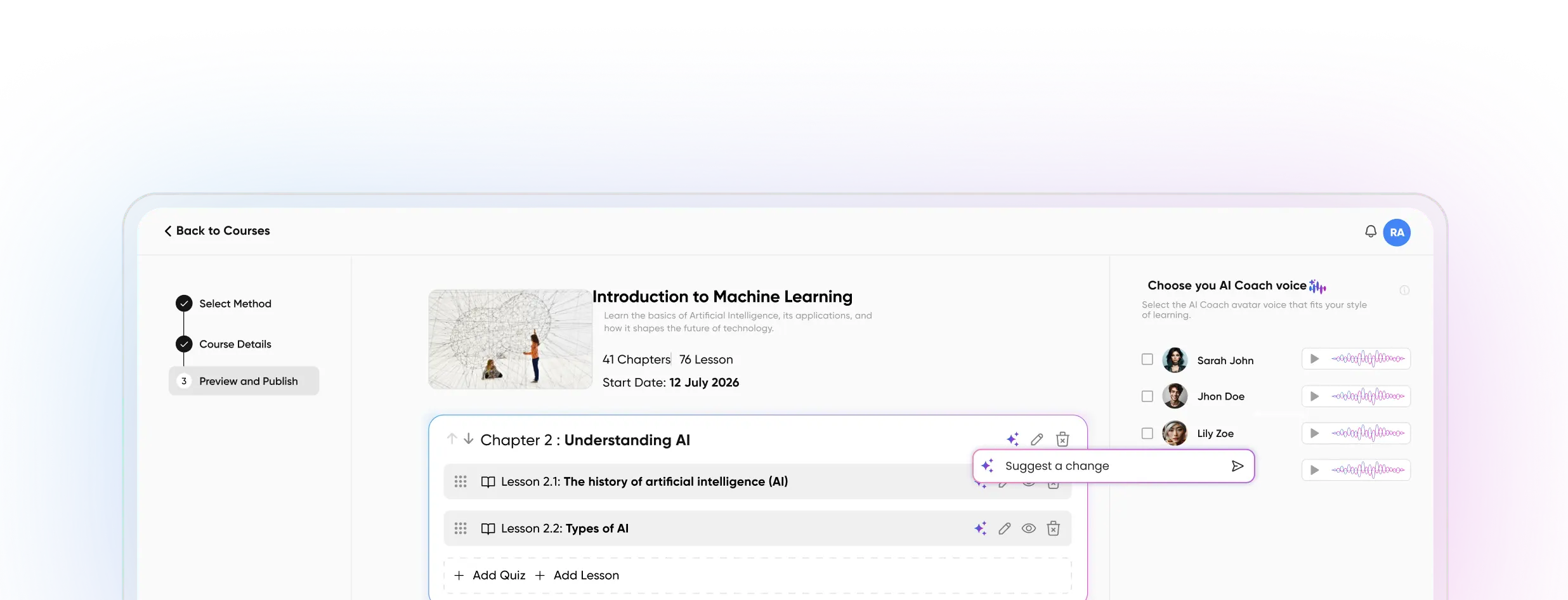
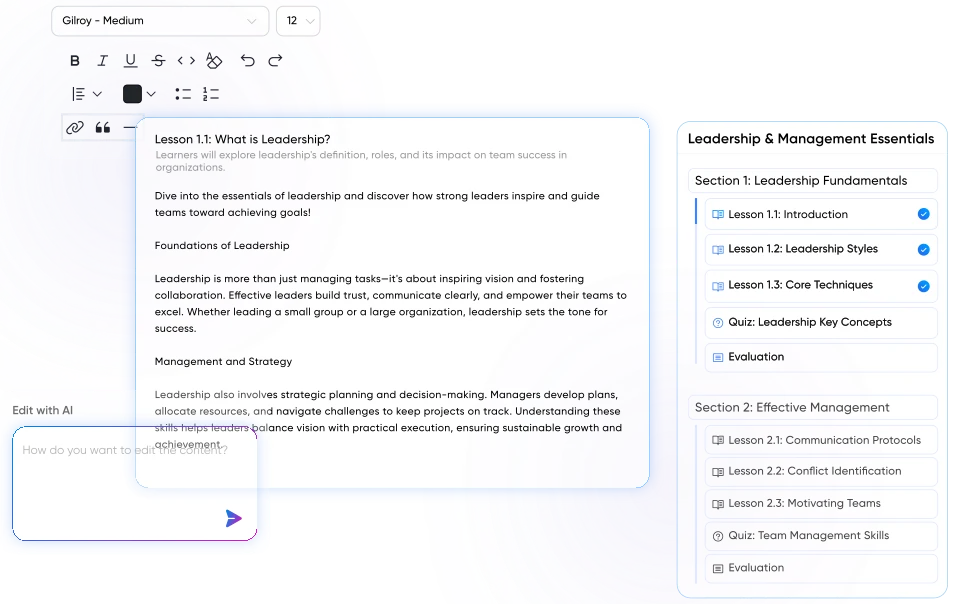
The Vocaliv course editor with the template's modules being rewritten around the organization's leadership principles and one-to-one expectations
1

Align the course to your manager expectations and people processes

Add your leadership principles, manager handbook, goal-setting approach, one-to-one expectations, performance framework, HR escalation routes, values and role-specific responsibilities.

2

Add real management scenarios from your workplace

Turn recurring manager questions, anonymized people-management situations, team challenges and common decision points into practice scenarios that reflect how your managers actually work.

3

Generate knowledge checks and practice activities

Create short assessments around expectation setting, delegation, feedback, performance conversations, listening, accountability and appropriate escalation.

4

Turn the course into presentation-ready slides

Prepare an instructor-led version for new-manager onboarding, leadership workshops, manager academies, cohort sessions or periodic development programs.

5

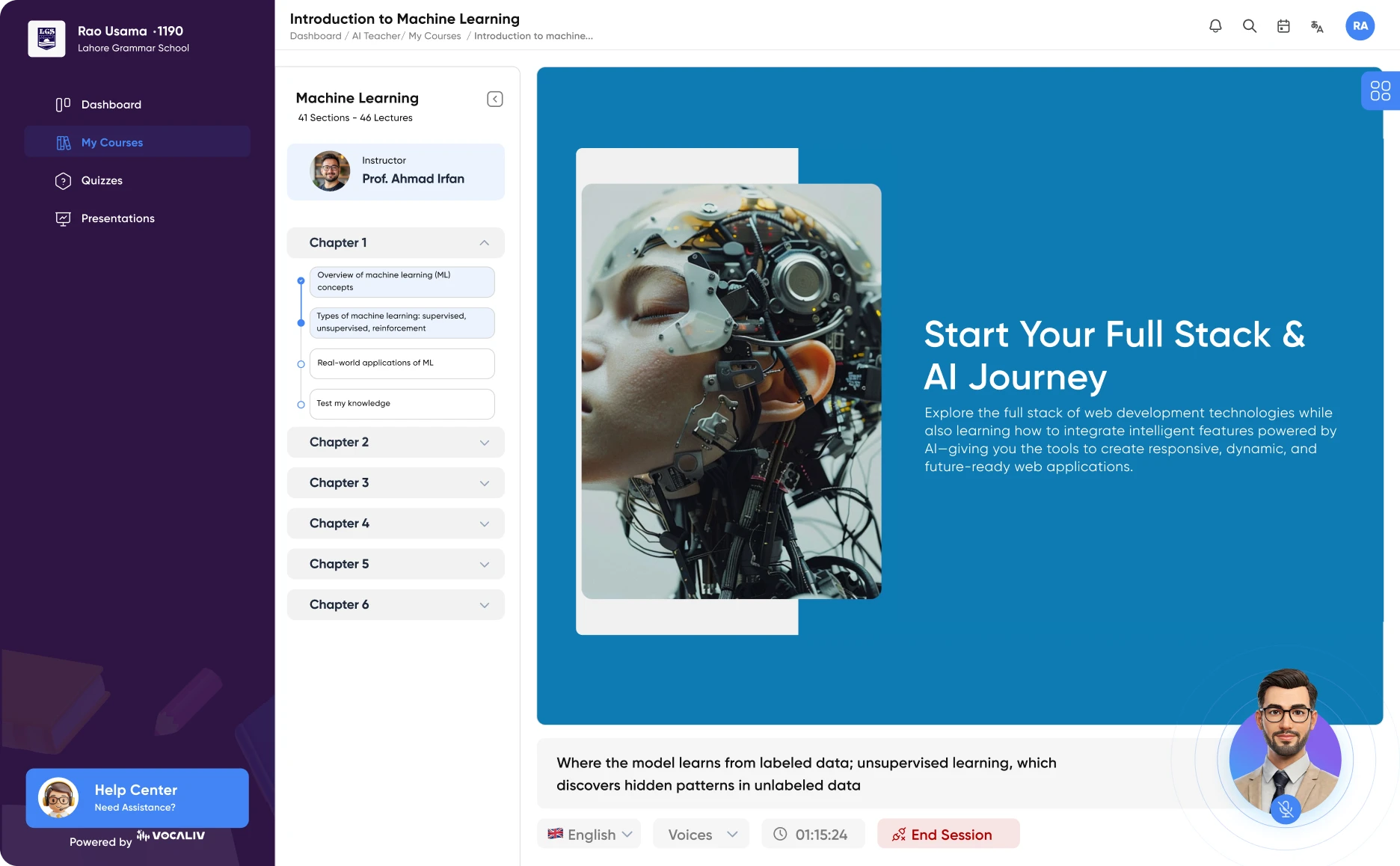
Use Vocaliv AI Coach where appropriate

Let learners ask questions based on the approved course content, manager guidance and policies you provide. The AI Coach can support practice and reinforcement, while sensitive employee relations, legal interpretations and live people decisions remain with the appropriate internal owner.

6

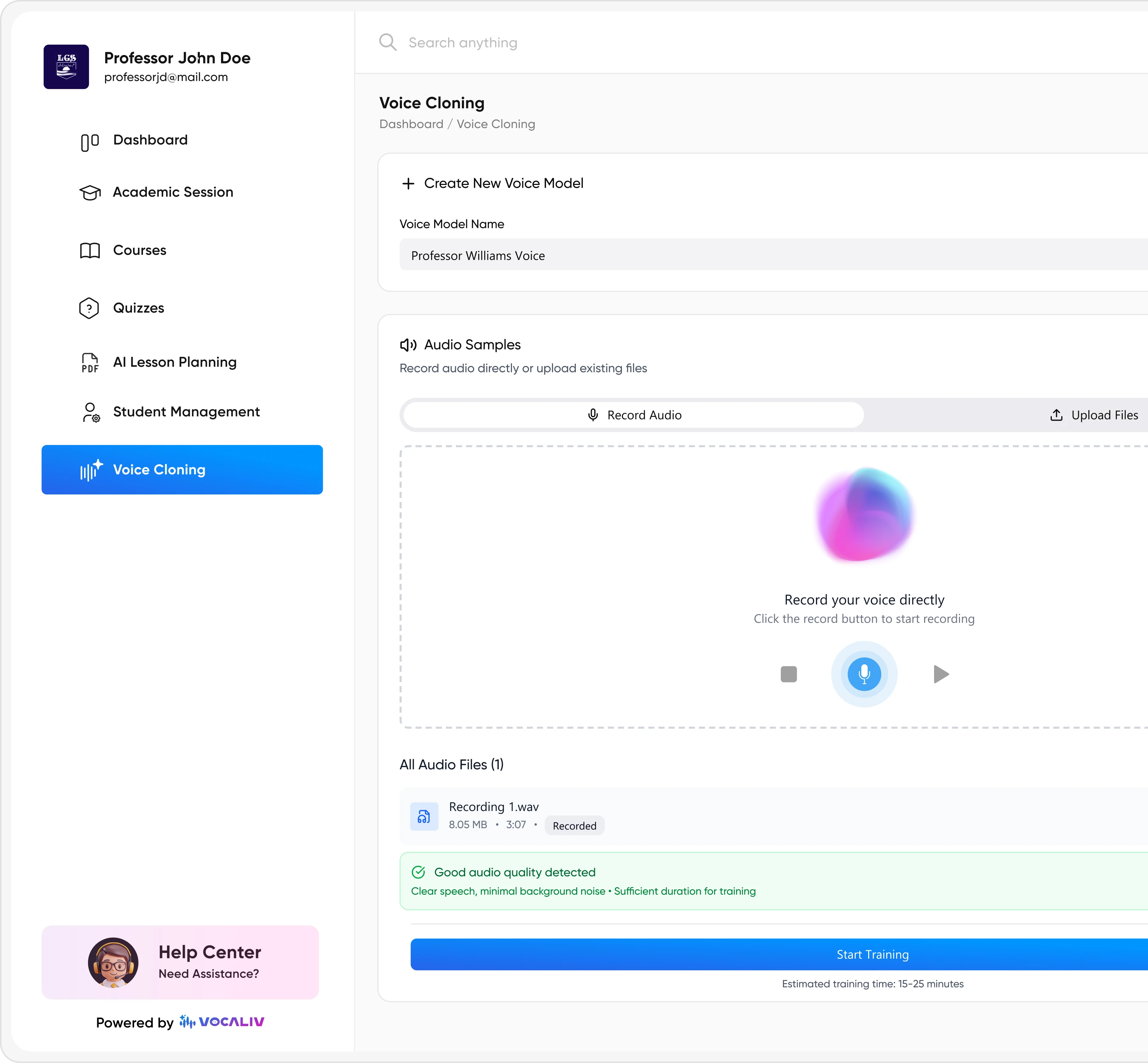
Use your trainer's voice

Where appropriate, voice cloning can help deliver AI-assisted course content in a familiar leadership facilitator, L&D or people-team voice.

FAQ

Frequently Asked Questions

Help New Managers Lead With More Clarity and Confidence

Start with a structured leadership fundamentals template, add your manager expectations and real workplace scenarios, and give first-time managers practical tools they can apply with their teams.

Chat with us 👋