Help managers lead teams with clearer direction, stronger ownership and less unnecessary dependence on the manager. Use this ready-to-customize course template to develop practical skills in team leadership, role clarity, delegation, decision rights, accountability, progress check-ins, trust and follow-through - then adapt the examples, expectations and tools to your organization in Vocaliv.
Team leadership is not about personally solving every problem or controlling every task. Managers need to set direction, clarify responsibilities, make priorities visible and give people appropriate ownership while staying available for support. Delegation is a central part of that work: it helps managers focus on higher-value responsibilities while giving team members meaningful opportunities to contribute, learn and make decisions.
This template provides a practical foundation for leading teams and delegating effectively. It covers team direction and role clarity, matching work to people, setting outcomes and decision boundaries, delegating conversations, trust and autonomy, progress check-ins, accountability and handling delegation problems.
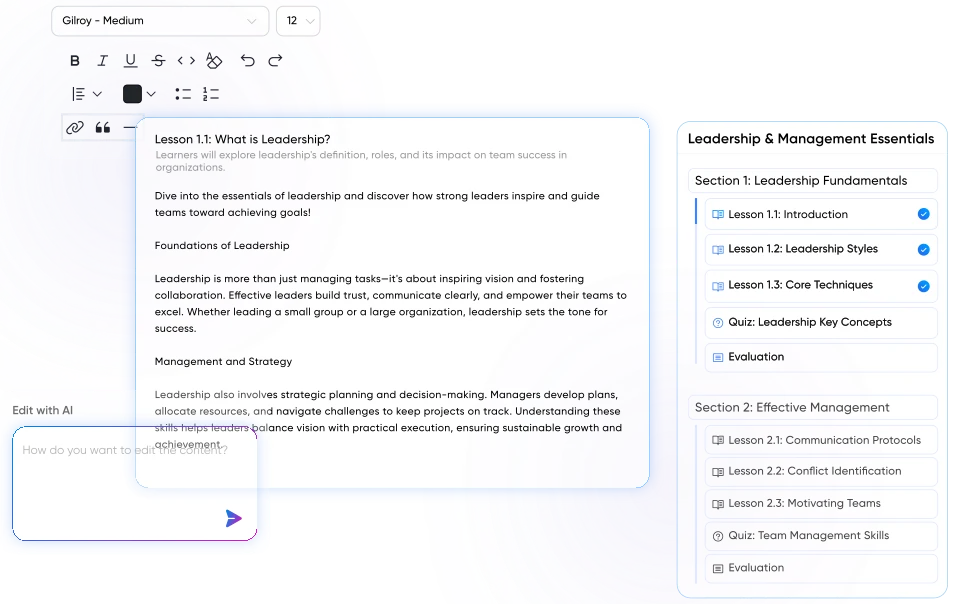
A suggested eight-module structure that can be adapted to your team model, manager expectations, decision processes and operating environment.
Clarify the shift from doing the work personally to creating the conditions for others to perform. Explore direction, priorities, coordination, support and accountability as core manager responsibilities, and identify signs that the manager has become the team's decision or approval bottleneck.
Help managers translate goals into clear priorities, responsibilities and standards. Practice defining who owns what, where work overlaps and how to reduce ambiguity before it turns into duplicated effort, missed handoffs or unnecessary escalation.
Build judgment around delegation choices. Consider the importance, risk, confidentiality, development value, urgency, required authority and capability involved in the work, and distinguish between work that can be delegated, shared or should remain with the manager.
Help managers consider capability, workload, experience, interest and development goals when assigning ownership. Reinforce that delegation should stretch people appropriately without setting them up to fail or repeatedly overloading the same reliable employees.
Practice a structured delegation conversation that explains the desired outcome, why the work matters, what good looks like, available resources, time constraints, decision rights, approval boundaries and situations that require escalation. Check understanding instead of assuming the message was clear.
Show managers how to stay informed without taking control back. Set checkpoints based on risk and experience, ask about progress and obstacles, provide support when needed and avoid turning every update into detailed instructions that undermine ownership.
Connect delegation to accountability. Agree commitments, make ownership visible, follow up consistently and give specific feedback on both the result and the way the work was handled. Reinforce recognition when people take effective ownership and address missed commitments early.
Work through common problems such as unclear expectations, insufficient authority, capability gaps, poor check-ins, missed deadlines, over-delegation or the manager taking work back too quickly. Help managers diagnose the cause, reset the agreement and improve the next delegation cycle.
Give managers a practical way to create clarity, distribute ownership and keep work moving without becoming the bottleneck for every decision.
Help managers move appropriate decisions and responsibilities closer to the people doing the work instead of requiring the manager to approve every step.
Make responsibilities, outcomes and decision rights easier to understand so people know what they own and when they should escalate.
Use delegation as a development tool by giving employees opportunities to make decisions, solve problems and expand their skills with appropriate support.
Teach managers to set proportionate checkpoints and focus on outcomes and risks instead of controlling every detail of how work is completed.
Connect ownership to clear commitments, progress conversations and timely feedback so delegated work does not disappear between assignment and deadline.

By the end of the training, learners should be able to:
Use one core leadership and delegation template, then emphasize the decisions, work patterns, autonomy levels and team challenges each manager audience is most likely to encounter.
| Audience | What to emphasize |
|---|---|
| New / first-time managers | Moving from individual contribution to leading through others, role clarity, what to delegate, delegation conversations, check-ins, trust, accountability and avoiding the urge to take work back. |
| Experienced people managers | Decision rights, broader ownership, developing team capability, reducing bottlenecks, balancing autonomy and risk, complex delegation and coaching other managers. |
| Team / project leads | Ownership across shared work, influence without full authority, handoffs, priorities, decision boundaries, stakeholder coordination and escalation when responsibilities overlap. |
| Sales / service / operations managers | Delegating recurring decisions, shift or account ownership, quality standards, service recovery boundaries, workload distribution, rapid check-ins and clear escalation triggers. |
| Remote / hybrid managers | Outcome-based delegation, written clarity, asynchronous updates, choosing check-in cadence, avoiding visibility bias, maintaining trust and preventing over-monitoring. |
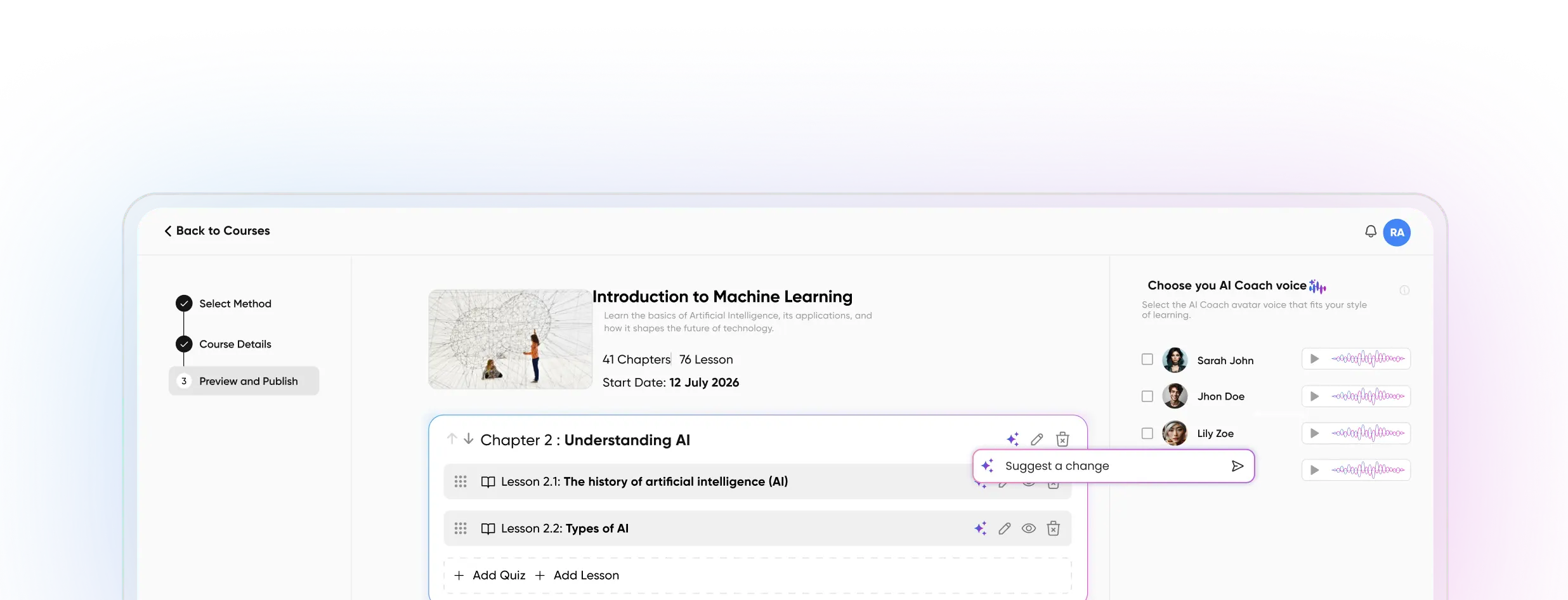
Start with the core leadership and delegation structure, then replace generic examples with your team model, role expectations, approval limits, leadership principles and real work situations.

Add your manager expectations, role definitions, decision rights, approval levels, team rituals, escalation routes and leadership principles so the training reflects how work should actually move through your organization.
Turn recurring bottlenecks, approval problems, missed handoffs, workload issues, project delegation challenges and anonymized team situations into practice activities managers can recognize.
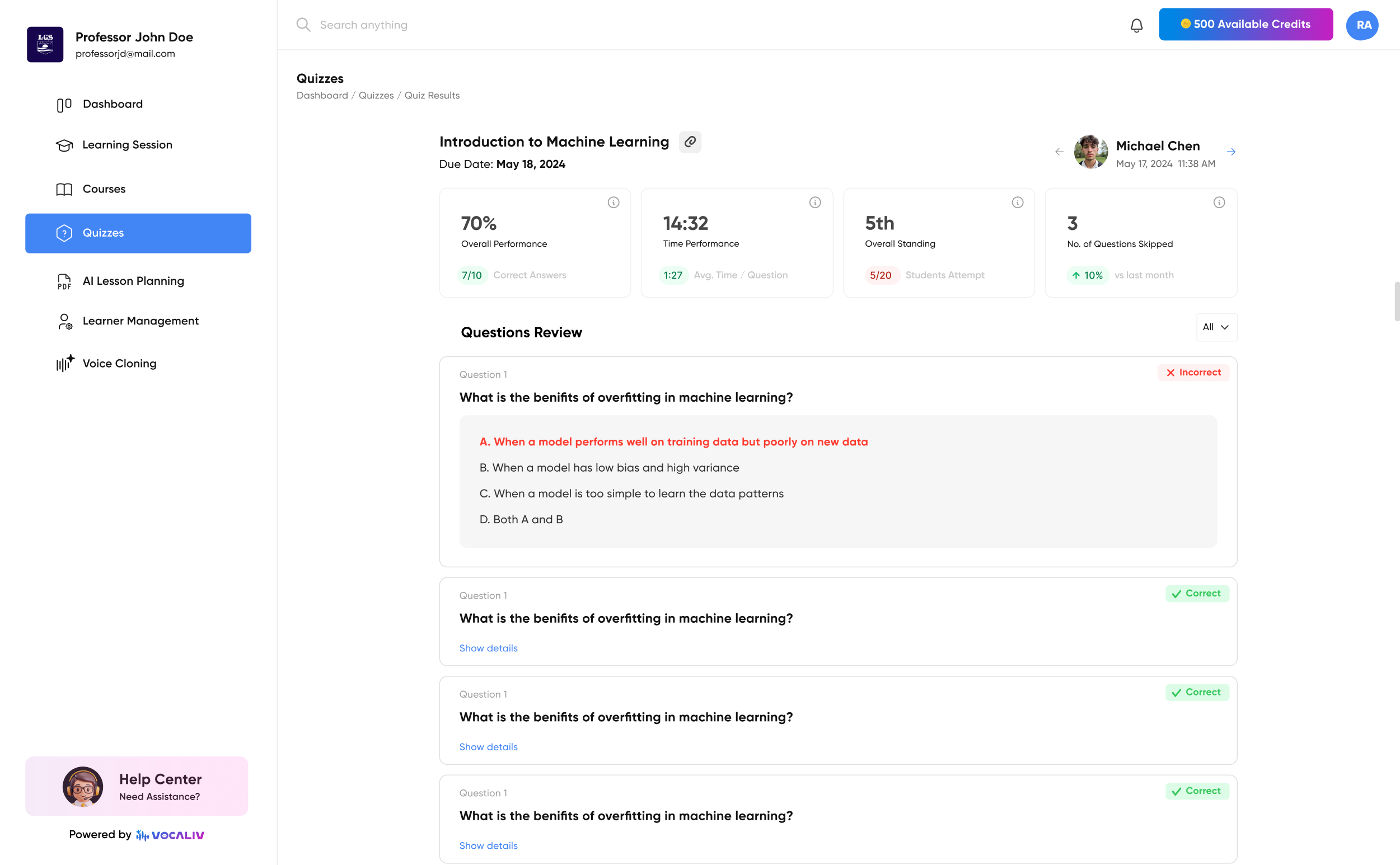
Create short assessments and reflection prompts around delegation choices, outcome clarity, authority levels, check-ins, accountability and diagnosing why delegated work is off track.
Prepare an instructor-led version for new-manager onboarding, leadership workshops, manager academies, team-lead development or periodic management refreshers.
Let learners ask questions based on the approved leadership guidance, decision rules and examples you provide. The AI Coach can support practice and reinforcement, while live people decisions, sensitive employee issues, policy exceptions and formal accountability actions remain with the appropriate internal owner.
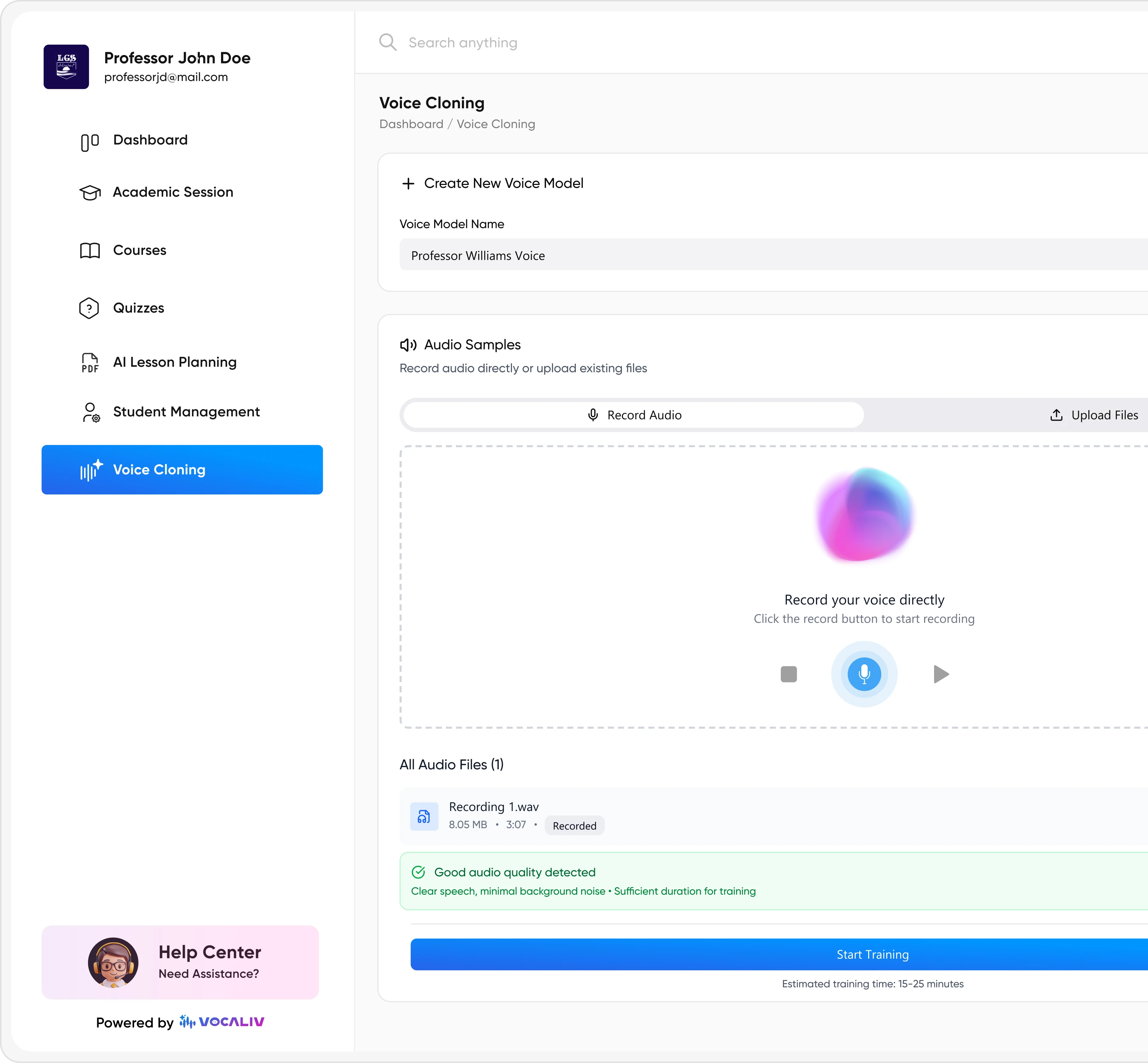
Where appropriate, voice cloning can help deliver AI-assisted course content in a familiar leadership facilitator, L&D or people-team voice.
Start with a structured team leadership and delegation template, add your roles, decision rights and real workplace scenarios, and give managers practical tools to distribute ownership, support people and keep work moving.